
Last updated October 15, 2026
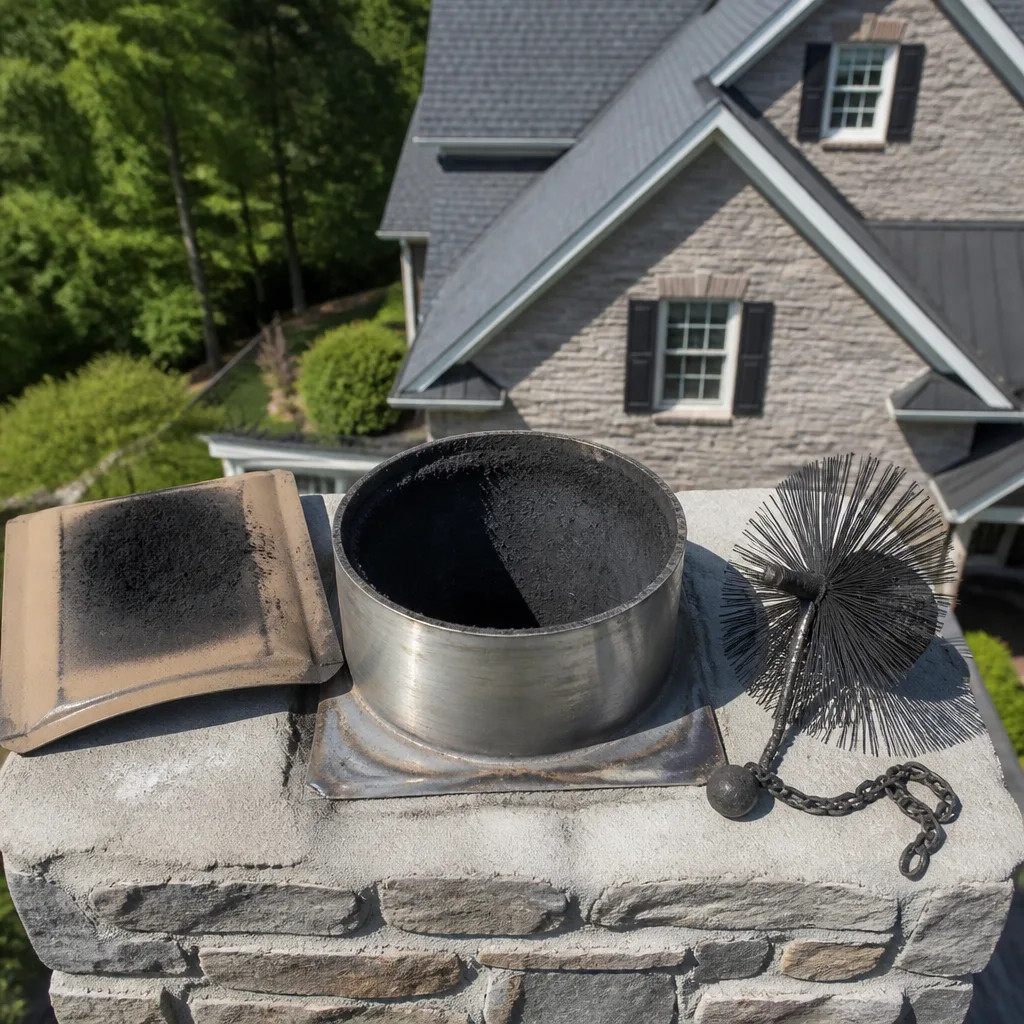 Sweep & inspection
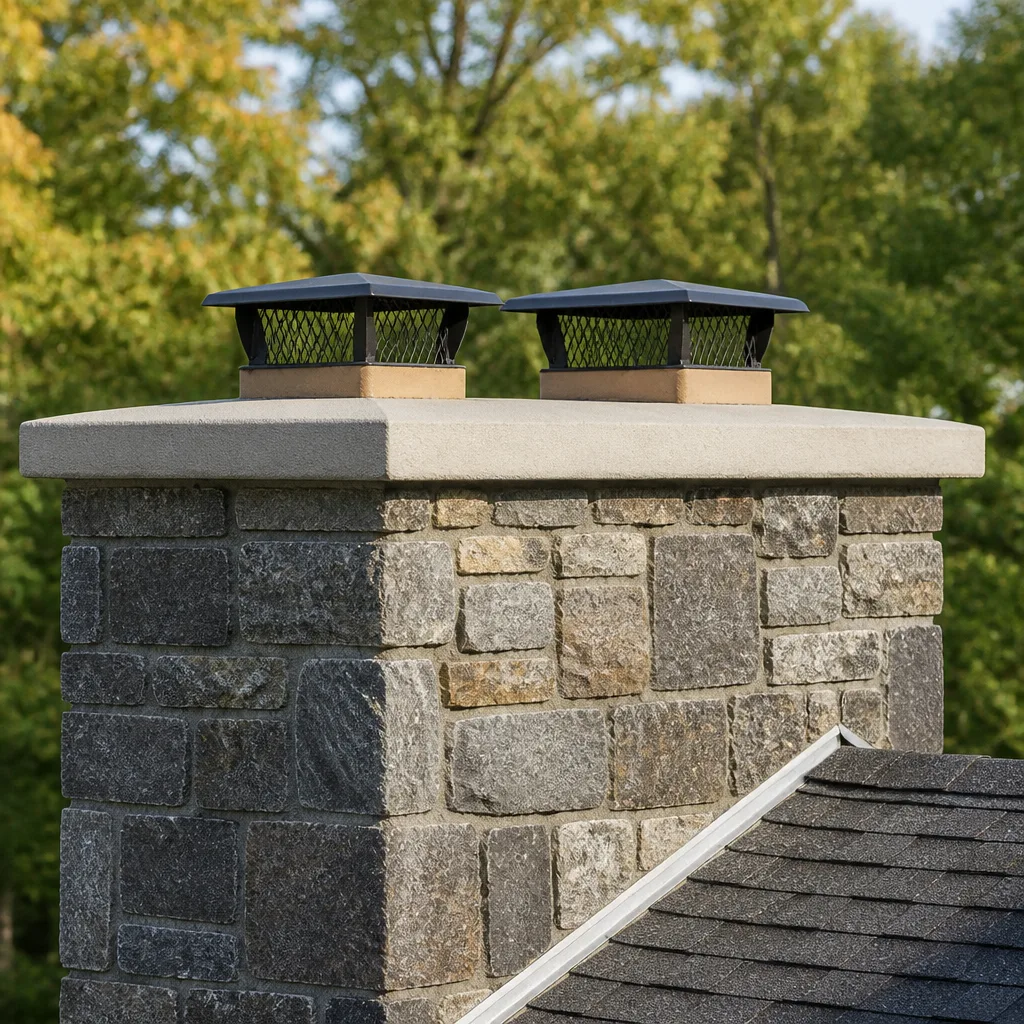 Caps & crowns
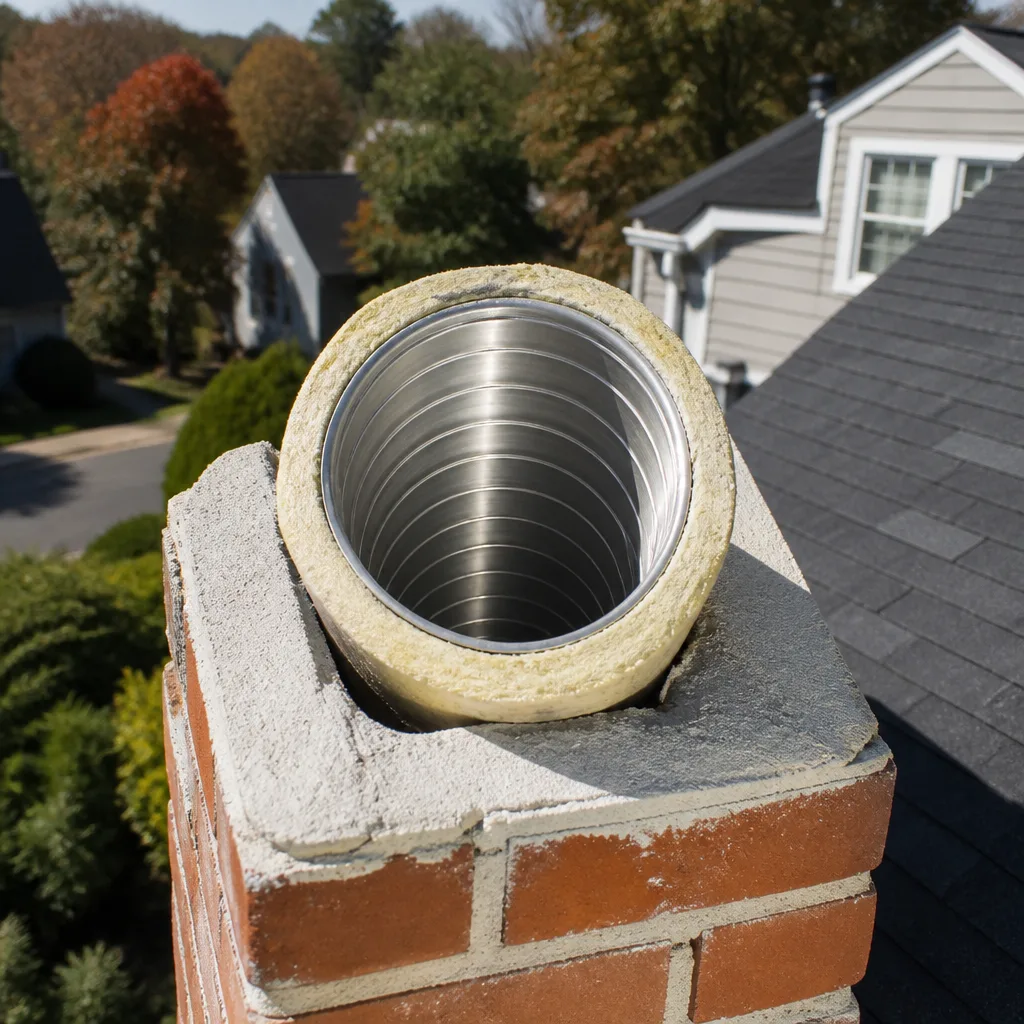 Flue relining
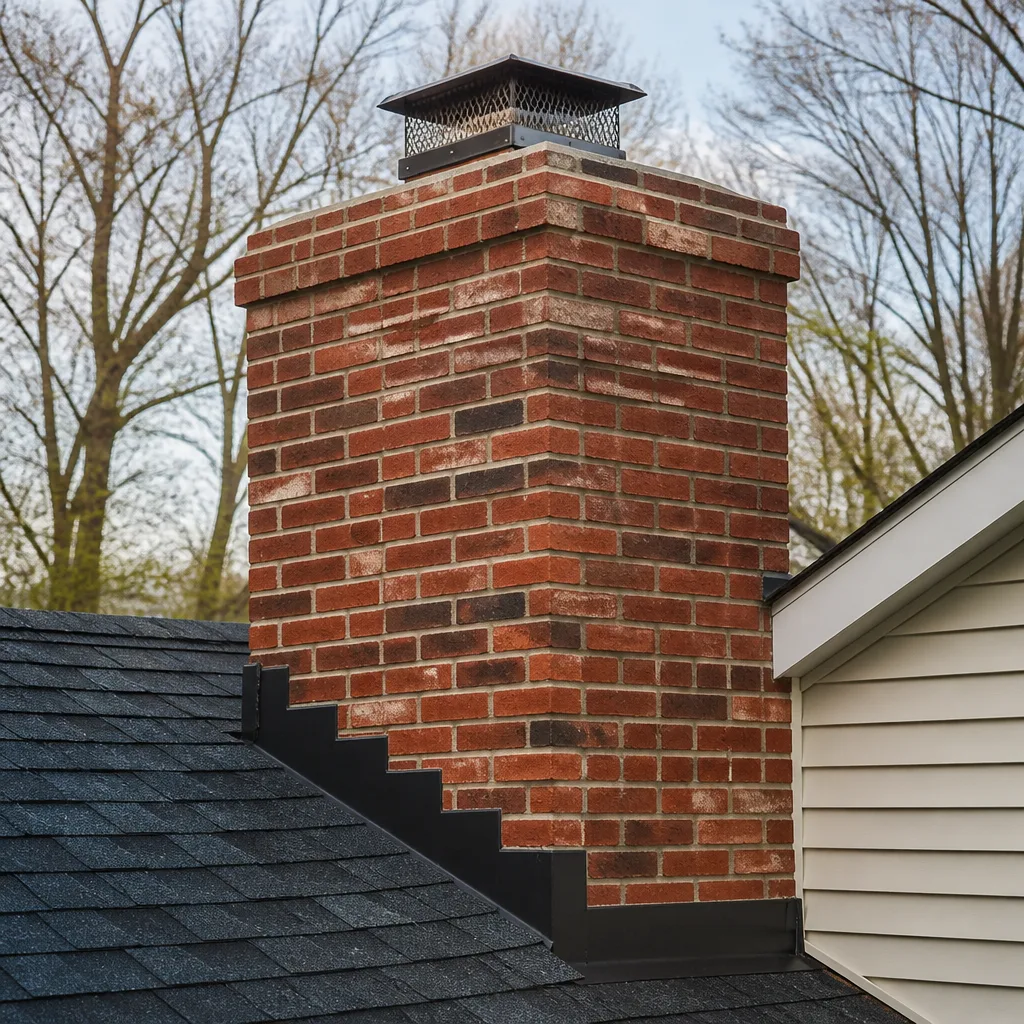 Masonry repair
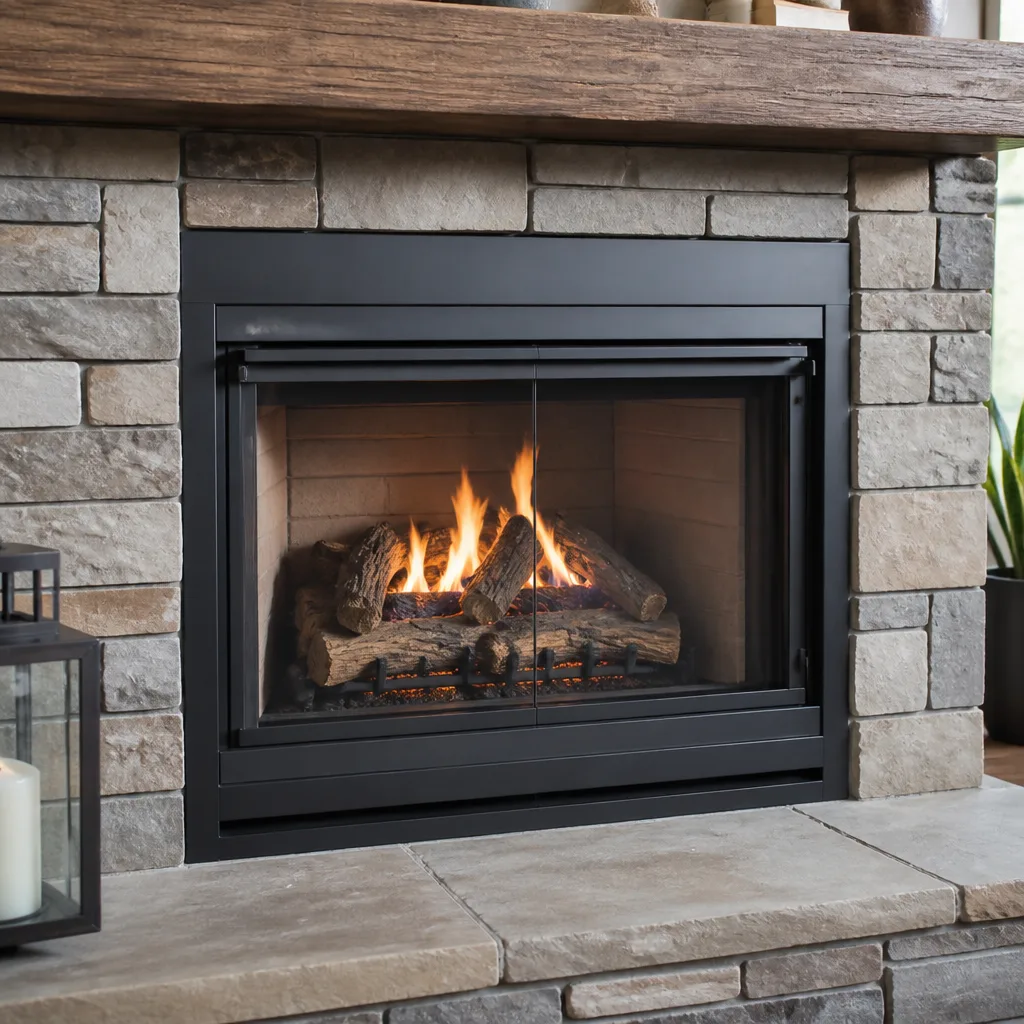 Gas fireplace service
Level 1 sweep and inspection to the NFPA 211 annual standard - flue, crown, cap, and flashing checked and photographed
Chimney sweep logs do not sweep chimneys. They loosen some creosote - which then falls where a brush and vacuum still have to collect it.
DIY vs Professional Chimney Cleaning: The Long Beach Homeowner’s Decision Guide
You can buy a chimney brush, a set of fiberglass rods, and a tarp for roughly $60 at any hardware store in Long Beach. That equipment will let you knock loose soot and creosote from the flue walls. What it won’t do is show you the hairline crack in a clay tile liner that’s been slowly opening up behind the soot for three winters, and in a coastal climate like Long Beach’s, that crack is the failure mode that actually causes house fires. This guide draws the honest line between what a homeowner can legitimately handle and what requires a trained eye, because the distinction has nothing to do with effort and everything to do with information.
Styles & brands we work with
Quick Answer
DIY chimney cleaning in Long Beach is a reasonable option for light, interim maintenance on a low-use fireplace that already has a clean professional inspection on record. It is not a substitute for professional cleaning and inspection, because a homeowner with a brush cannot evaluate liner integrity, and a cracked flue liner is the leading cause of preventable chimney fires in coastal homes. Most Long Beach homeowners get the best outcome by doing basic DIY upkeep between professional sweeps and camera inspections.
Table of Contents
- What DIY Chimney Cleaning Actually Involves
- What DIY Cannot See: The Inspection Gap
- The Long Beach Factor: Coastal Air and Chimney Wear
- Real Costs: DIY vs Professional in Long Beach
- The Insurance Angle: What Your Policy Expects
- The Honest DIY Use Case
- How to Evaluate Professional Work If You’ve Done DIY
- Common Mistakes to Avoid
- When to Call a Professional
- Frequently Asked Questions
- The Bottom Line
What DIY Chimney Cleaning Actually Involves
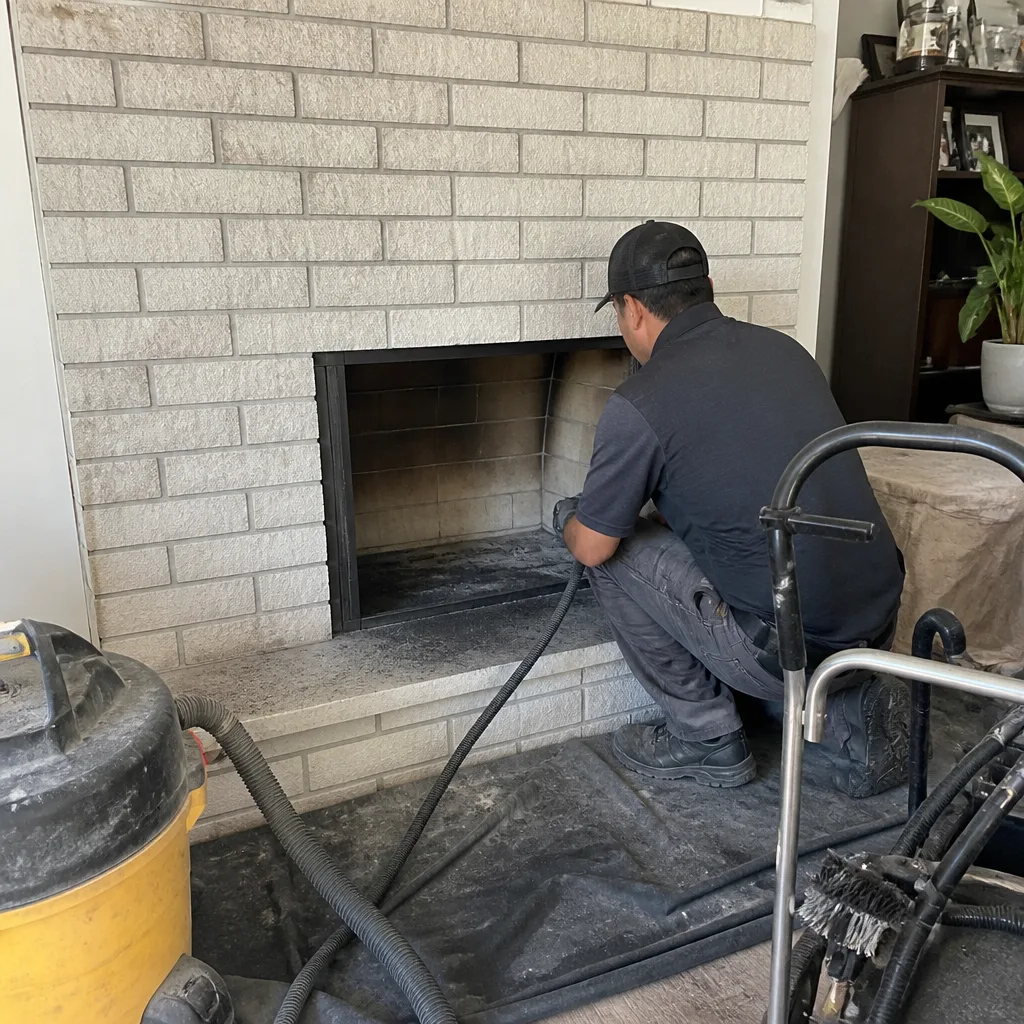
A proper DIY sweep is not running a brush up and down a few times and calling it done. The correct method uses a wire or poly brush sized to your flue diameter, attached to flexible fiberglass rods, worked from either the roof down or the firebox up. If you’re going through the firebox, you’ll need a sealed tarp system duct-taped over the fireplace opening, a shop vacuum with a HEPA filter running the entire time, and a second person to manage the dust cloud that inevitably escapes no matter how tight the seal. Most first timers underestimate the mess by a factor of four.
Here’s the realistic first-time sequence:
- Prep the room: Cover furniture, seal vents, lay drop cloths from the hearth to the nearest exit, and tape a full containment barrier over the firebox opening.
- Inspect what you can reach: Look up the flue with a flashlight. You’ll see the first three to four feet clearly and then darkness. That’s the limit of unaided sight.
- Run the brush: Assemble rods and brush, work it up and down through the full flue length, adding rods as you go. Expect 45 minutes to an hour for a standard two-story house in Long Beach.
- Wait for dust to settle: This is the part nobody budgets for. After the brushing, you wait 20 to 30 minutes before breaking the seal, or you’ll coat the living room in fine black soot.
- Vacuum everything: The firebox, the smoke shelf (reachable only from inside the firebox, and only partially), the damper assembly, and the hearth perimeter.
- Dispose of creosote: It’s not just dust. Creosote is a flammable byproduct that needs to go into a sealed metal container and then into your regular trash, never into the yard or a plastic bag.
Total realistic time for a first-timer: three to four hours, including cleanup. Time for an experienced technician with professional equipment: 45 minutes to an hour, with a far messier return on your part only if you chose to go the DIY route. The time savings alone doesn’t justify professional service. The difference is what the professional sees while the brush is in the flue. But we’ll get to that.
In our experience cleaning chimneys across Long Beach, we’ve walked into enough DIY aftermaths to know the pattern: the brush work was competent, the smoke shelf and smoke chamber were ignored because the homeowner didn’t know they existed, and the flue liner had a structural issue the brush passed right over. That’s the honest summary of what DIY accomplishes mechanically, and what it leaves untouched.
What DIY Cannot See: The Inspection Gap
The argument against DIY chimney cleaning isn’t skill. Plenty of Long Beach homeowners are perfectly capable of running a brush through a flue without hurting themselves or the house. The argument is information. Your chimney has several failure points that a brush cannot evaluate, and missing them is how chimney fires start in homes where the owner just cleaned the flue and assumed everything was fine.
Here’s what a professional Chimney Inspection in Long Beach covers that a homeowner physically cannot:
- Camera flue inspection: A rigid or flexible camera is fed through the full flue length, recording clear video of the liner walls. Hairline cracks in clay tile liners, gaps between tiles, and spalling (the flaking and crumbling of masonry caused by moisture absorption) are invisible to a brush but glaring on camera footage. This is the single most important difference between DIY and professional work.
- Smoke chamber evaluation: The smoke chamber is the sloped area above the firebox that funnels smoke up into the flue. It’s notoriously hard to reach with a brush from below, and it’s a common creosote collection point. A professional can inspect it with a camera and record its condition.
- Firebox floor integrity check: The firebox floor takes direct flame and heat cycling. Over years, the refractory bricks can crack or shift, and the seams can open. A professional looks for gaps that could allow heat to reach the subfloor framing, a failure mode that doesn’t announce itself with visible smoke.
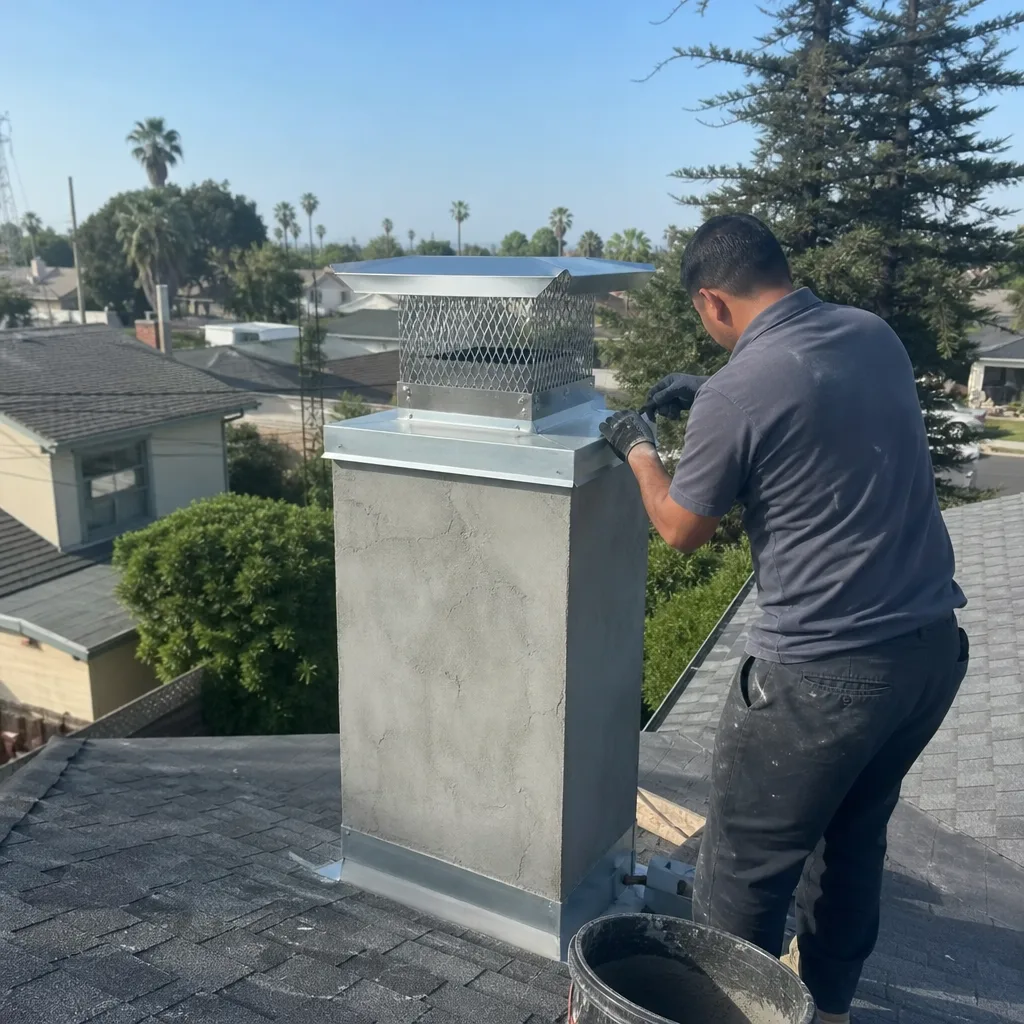
- Chimney cap and chase top examination: The cap sits at the top of the flue, exposed to every storm off the Pacific. A missing or damaged cap lets rain into the flue, and rainwater plus creosote equals an acidic slurry that attacks the liner and mortar joints. From the ground, a cap that’s shifted slightly looks fine. From the roof, the rusted mounting bracket is obvious.
- Mortar joint assessment at the crown: The crown is the concrete slab that seals the top of the chimney chase. Hairline separation in the crown allows water intrusion into the chase interior, which degrades the structure over time. This requires a ladder and a close look at the top of the stack, which is outside the scope of any DIY cleaning.
None of these are scare-tactic items. They are routine findings in coastal chimneys, and Long Beach’s salt air accelerates several of them. A homeowner who cleans their own flue and sees no visible soot problem has still not answered the question of whether the liner is intact, and that’s the question that determines fire safety.
The Long Beach Factor: Coastal Air and Chimney Wear
Long Beach has a specific climate that affects chimneys differently than inland Southern California cities like Riverside or San Bernardino. The marine layer off the Pacific brings moisture and salt into the air, and that combination works on masonry and metal chimney components in ways a homeowner in Temecula never has to consider.
Salt air corrodes metal flue components faster than inland air. Chimney caps, chase covers, and dampers in Long Beach homes show rust and pitting years earlier than identical installations 30 miles east. When a galvanized steel chase cover rusts through, water gets into the chase and soaks the wood framing, which then requires repair that could have been avoided with a $200 cover replacement caught during a routine inspection.
Moisture is the second issue. Long Beach’s average humidity runs significantly higher than inland cities, and the marine layer can sit on a neighborhood for days at a time in May and June. Masonry chimneys absorb that moisture. When you then light a fire, the water in the brick expands under heat, and over enough cycles, you get spalling and cracking in the tile liner. This is not a dramatic, sudden failure. It’s a gradual one that a camera inspection catches early and a DIY brush misses entirely.
The third factor is use pattern. Long Beach fireplaces are largely decorative and seasonal, as covered in our Seasonal Chimney Cleaning Care for Long Beach: Year-Round Homeowner’s Guide. Homeowners light maybe 10 to 20 fires a year, almost all between November and February. That low usage creates a false sense of security. The chimney isn’t getting heavily loaded with creosote, so the homeowner assumes there’s nothing wrong. But the off season is exactly when moisture is doing its work inside the flue, and the relatively rare fires mean the damage goes unnoticed longer.
We’ve seen this specific failure in neighborhoods across Long Beach, from Belmont Shore to Los Altos, from Bixby Knolls to the Naples canals. A clay tile liner with a moisture-created crack that the homeowner never knew about, because the chimney had light use and no one looked inside with a camera for a decade. The house fire prevention angle in Long Beach is not about heavy creosote buildup. It’s about visible liner integrity, and that’s precisely the thing DIY cleaning cannot deliver.
Real Costs: DIY vs Professional in Long Beach
Let’s put numbers on this, because the cost comparison is the first thing every homeowner asks, and it deserves a straight answer. For a detailed look at what to expect, see our Chimney Cleaning Cost Breakdown: The Long Beach Homeowner’s Reference for 2026.
DIY Costs
- Brush and rod kit: $40 to $70 at a Long Beach hardware store or big-box retailer. Poly brushes are cheaper but wear faster; wire brushes last longer but can damage stainless steel liners if used incorrectly.
- Drop cloths and tape: $15 to $25 if you don’t already have them.
- Shop vacuum with HEPA filter: $80 to $150 if you don’t own one. Using a standard shop vac without a HEPA filter sends fine soot into your living room air, which is a respiratory irritant.
- Safety gear: $20 to $40 for goggles and a proper dust mask. A standard paper mask is not enough.
- Your time: Three to four hours for the first attempt, including cleanup. Value that at whatever your weekend hours are worth to you.
Total DIY first-time cost: $175 to $285 plus a full afternoon. Repeat cleanings get cheaper and faster, which is the one genuine argument in DIY’s favor for ongoing maintenance.
Professional Sweep Costs in Long Beach
A standard Chimney Sweep in Long Beach typically runs $180 to $350 depending on flue height, liner type, and accessibility. That price should include the full sweep, a visual inspection of accessible components, and a report on what was found. A camera inspection is typically an additional $75 to $150 if it’s not bundled, and most reputable companies bundle it with the sweep or offer it as a clearly priced add-on.
| Task | DIY Cost | Professional Cost |
|---|---|---|
| Basic flue brushing | $40-$70 (equipment) | $180-$350 (full sweep) |
| Containment & cleanup | $15-$25 (materials) | Included |
| Camera flue inspection | Not possible | $75-$150 |
| Smoke chamber evaluation | Not possible | Included with inspection |
| Liner integrity assessment | Not possible | Included with inspection |
| Written condition report | Not applicable | Included |
The honest math: a one-time DIY setup costs about the same as a professional sweep, but you still don’t have the inspection. A homeowner who already owns the equipment and has a recent clean inspection on file can do interim DIY cleanings for essentially the cost of an afternoon. That’s the narrow window where DIY makes financial sense, and we’ll get to it below.
Flint Chimney Co Long Beach writes every price before work begins. The number on the invoice is the number you approved, not a mystery that gets revealed after the job is done. Call (562) 317-7262 for a free estimate, and you’ll know the full cost before any tool comes off the truck.
The Insurance Angle: What Your Policy Expects
Here’s a conversation most Long Beach homeowners never have with their insurance agent until after something goes wrong: what does your policy say about chimney maintenance documentation? The answer varies by carrier, but the pattern is consistent enough to discuss honestly.
Most California homeowners policies cover chimney fires as part of the standard fire peril. The coverage is not in question. What is in question is whether the insurer considers the fire preventable through reasonable maintenance. If a chimney fire occurs in a flue that has no documented professional inspection or cleaning on record, the adjuster has a reasonable basis to argue neglect. That argument doesn’t void the claim outright in most cases, but it can affect the settlement, and in extreme cases of documented neglect, a carrier can deny a claim on maintenance grounds.
Here’s the practical takeaway: a homeowner who can produce a professional inspection report from within the last two years is in a fundamentally better position with their insurance company than a homeowner who says they cleaned the chimney themselves. The reason isn’t that insurance companies distrust homeowners. It’s that they need documentation, and DIY cleaning by definition produces none.
This isn’t a reason to skip DIY maintenance if you’re doing it correctly. It’s a reason to pair it with a professional inspection at regular intervals. The professional record establishes that the chimney was in safe condition at a known date, and that’s the document that matters when questions get asked after an incident.
Long Beach has its own additional wrinkle: several neighborhoods are in what insurers classify as brush-adjacent or wildfire-adjacent zones, and carriers have tightened underwriting standards for those areas. A documented chimney maintenance history is one of the items that can smooth a renewal conversation if your policy comes up for review. The homeowners who think about this before a claim are the ones who don’t have to think about it during one.
The Honest DIY Use Case
There is a legitimate scenario where DIY chimney cleaning makes sense, and it’s narrower than the hardware store aisle would have you believe. It looks like this:
- Your chimney had a clean professional inspection within the last 18 to 24 months. This means the liner has been camera-checked, the smoke chamber has been evaluated, and no structural issues were identified. You have the report on file.
- You use the fireplace lightly. Ten to 15 fires per year, burned with seasoned hardwood, never with green wood, manufactured logs, or trash. Light use means light creosote accumulation.
- You’re doing interim maintenance between professional visits. The professional sweep still happens every two years. Your DIY work is keeping the flue clean in the meantime so the next professional inspection has a clear view.
- You accept the limitations. You understand that your brush work does not replace an inspection, and you don’t skip the next scheduled professional visit because you cleaned the flue yourself.
In that scenario, a homeowner who already owns the equipment can justify an hour of DIY work between inspections. The flue stays clean, the creosote doesn’t build, and the professional inspection stays on schedule. This is the honest middle ground, and it’s what we recommend to Long Beach homeowners who want to be hands-on with their homes.
What doesn’t work is the reverse: using DIY cleaning as a replacement for professional inspection altogether. That’s the homeowner who cleans their own flue for ten years and never has a camera put through it. They’ve saved roughly $2,000 over a decade against professional maintenance costs, and they’ve missed every chance to catch a developing liner problem before it became a fire hazard or a $3,000 repair. The math on that trade is not good.
If you’ve been cleaning your own chimney for years and haven’t had a professional look at it recently, the next step is simple: schedule a camera inspection, not because you’re doing anything wrong, but because you’re flying blind without it. Flint Chimney Co Long Beach home offers inspection services with full camera documentation across Long Beach.
How to Evaluate Professional Work If You’ve Done DIY
If you’ve done your own chimney cleaning, you have a real advantage when hiring a professional: you know what the inside of your flue looks like, and you know where the brush reaches and where it doesn’t. That knowledge lets you evaluate professional work with much sharper eyes than a homeowner who’s never looked up the flue.
Here’s what a genuinely thorough professional cleaning looks like, measured against the DIY baseline:
- The technician protects the home before touching the flue. Drop cloths from the front door to the hearth, a sealed barrier over the firebox opening, and a HEPA vacuum running before the brush goes in. If there’s dust in your living room air during the job, the containment wasn’t adequate.
- The sweep covers the full flue length. You’ll hear the brush working all the way up. A quick brush-and-go that takes 15 minutes has skipped entire sections of the flue.
- The smoke shelf and smoke chamber get attention. This is the number one DIY blind spot. A professional should spend time here, and a good one will show you the creosote that came out of a chamber you couldn’t reach yourself.
- The firebox floor is checked, not just vacuumed. The technician should be looking at the refractory bricks with a flashlight, tapping for hollow sounds, and checking seams. If they vacuum and move on without a close look, the inspection portion was perfunctory.
- You get a written report. Not a verbal summary. Not a “looks good.” A written condition report that documents what was cleaned, what was inspected, and what was found. If a company won’t put findings in writing, that’s a signal to find one that will.
Flint Chimney Co Long Beach operates under The Garrison Standard, which means every visit includes written documentation of price, scope, and findings. The report is yours to keep, and it’s the document your insurance company will want to see if anything ever goes wrong. That’s not an extra service. It’s the baseline.
For repairs, the same standard applies. Every Chimney Repair in Long Beach we perform carries a written guarantee valid for one full year from the service date. If a covered repair fails within that period, we return at no charge. That’s The Garrison Code, and it’s not a marketing promise. It’s the operating rule for every Garrison Partners location, and it’s been that way since the family of companies was founded in 2002.
Common Mistakes to Avoid
The following mistakes show up repeatedly when we’re called in after a DIY attempt or after a homeowner hired the wrong company. Each one is preventable with the right information.
- Using a brush that doesn’t match the liner material. Steel brushes on a stainless steel liner will score the metal and reduce the liner’s lifespan. The correct brush depends on your liner type, and guessing wrong causes damage that exceeds the cost of professional cleaning.
- Cleaning a flue with no idea what a clean flue should look like. You can’t tell if you’ve done an adequate job without a reference point. We’ve seen homeowners who scrubbed their flue to bare tile and thought it was fine, while the smoke chamber above was packed with creosote they’d never seen.
- Ignoring the smoke shelf entirely. The smoke shelf is the horizontal ledge behind the damper. It collects creosote and debris, and it’s the most common area that DIY cleaners miss. A professional sweep makes this a routine part of the job.
- Skipping the professional inspection because the DIY cleaning went fine. The cleaning going fine tells you nothing about liner integrity. We’ll repeat this point because it’s the entire thesis of this guide: the brush cannot see cracks. Only a camera can.
- Hiring the cheapest sweep you can find and accepting a verbal “all good” as the deliverable. A low-price sweep that skips the smoke chamber and produces no written report is not a sweep. It’s a brush run for show. In Long Beach, where half the fireplace companies are part-time operations with a truck and a business card, this happens more often than homeowners realize.
- Neglecting the chimney cap. A missing or damaged cap lets rain into the flue, and rain plus creosote creates an acidic mix that attacks the liner. This is a $200 fix that prevents a $2,500 problem. Check the cap every time you’re on the roof for any reason, or have it checked during a professional visit.
- Burning unseasoned wood because it was cheap or convenient. Green wood produces heavy creosote in a single season that would take seasoned wood three years to accumulate. Long Beach homeowners with a beach bonfire mental model sometimes apply the same logic to the fireplace at home. The two are not comparable.
When to Call a Professional
Call a professional if any of the following applies to your Long Beach home:
- Your chimney hasn’t had a camera inspection in three or more years.
- You’ve noticed a smoky smell in the house when the fireplace isn’t in use.
- You see cracks, gaps, or missing sections of mortar on the exterior chimney stack.
- Water is visible inside the firebox after rain.
- The damper is rusted, stuck, or no longer seals properly.
- You’ve just bought a home and have no documentation of the chimney’s maintenance history.
- You hear or see animals in the chimney, or you find nesting debris on the smoke shelf.
Flint Chimney Co Long Beach offers free estimates in Long Beach, and every estimate includes a written price before any work begins. Call (562) 317-7262 to schedule a sweep, an inspection, or a repair assessment.
Frequently Asked Questions
The National Fire Protection Association standard is an annual inspection, with cleaning performed whenever creosote accumulation reaches 1/8 inch or more. For a typical Long Beach fireplace burning 10 to 20 fires per year, a professional sweep every two years is generally adequate, with a camera inspection at the same interval. Fireplaces used more heavily should be swept annually. Call (562) 317-7262 if you’re unsure what schedule fits your usage.
A standard chimney sweep in Long Beach typically runs $180 to $350, with camera inspection adding $75 to $150 if not already bundled. Flint Chimney Co Long Beach provides a written price before any work begins, so the number you approve is the number on the invoice. Call (562) 317-7262 for a free estimate on your specific chimney.
Yes, you can physically remove loose creosote from the flue walls with a properly sized brush and rod kit, assuming you use adequate containment and a HEPA-filtered vacuum. What you cannot do is assess liner integrity, evaluate the smoke chamber, or document the chimney’s condition for insurance purposes. DIY cleaning is reasonable as interim maintenance between professional inspections, not as a replacement for them.
A visual look from the firebox shows the first few feet of flue and nothing more. A camera inspection shows the full liner length, including hairline cracks, tile gaps, and moisture damage that are invisible from below. In Long Beach’s coastal climate, where moisture damage to clay liners is the most common structural issue we find, a camera inspection is the only way to see what’s actually happening inside the flue.
Creosote accumulates, and over enough heating cycles it can ignite inside the flue, creating a chimney fire that can reach 2,000 degrees and crack the liner, spread to the house framing, or both. Separately, an uninspected chimney can have a damaged liner that allows heat to reach combustible framing even without a chimney fire. Both failure modes are preventable with routine inspection and cleaning.
No policy we’re aware of explicitly requires professional cleaning as a condition of coverage. However, a documented professional inspection history strengthens your position substantially if a chimney fire claim is filed, because it demonstrates reasonable maintenance. A homeowner with no documentation is in a weaker position with the adjuster. Call (562) 317-7262 if you need to establish a maintenance record with a professional inspection in Long Beach.
The Bottom Line
DIY chimney cleaning in Long Beach is a narrow tool, not a full solution. It works for a homeowner with recent clean inspection records who wants to keep a lightly used flue clear between professional visits. It fails the moment it’s asked to do what it cannot do: see liner cracks, evaluate the smoke chamber, or produce documentation that matters to an insurance company. The $180 to $350 professional sweep pays for itself not in the brushing but in the information that comes with it. For more guides & resources on keeping your chimney safe, explore our blog. A camera inspection is the only way to know if your chimney is safe, and in a coastal city where salt air and moisture are working on masonry all year, that knowledge is worth more than the cost.
Written by Hank Delano, Owner at Flint Chimney Co Long Beach, serving Long Beach since 2002.
See the difference
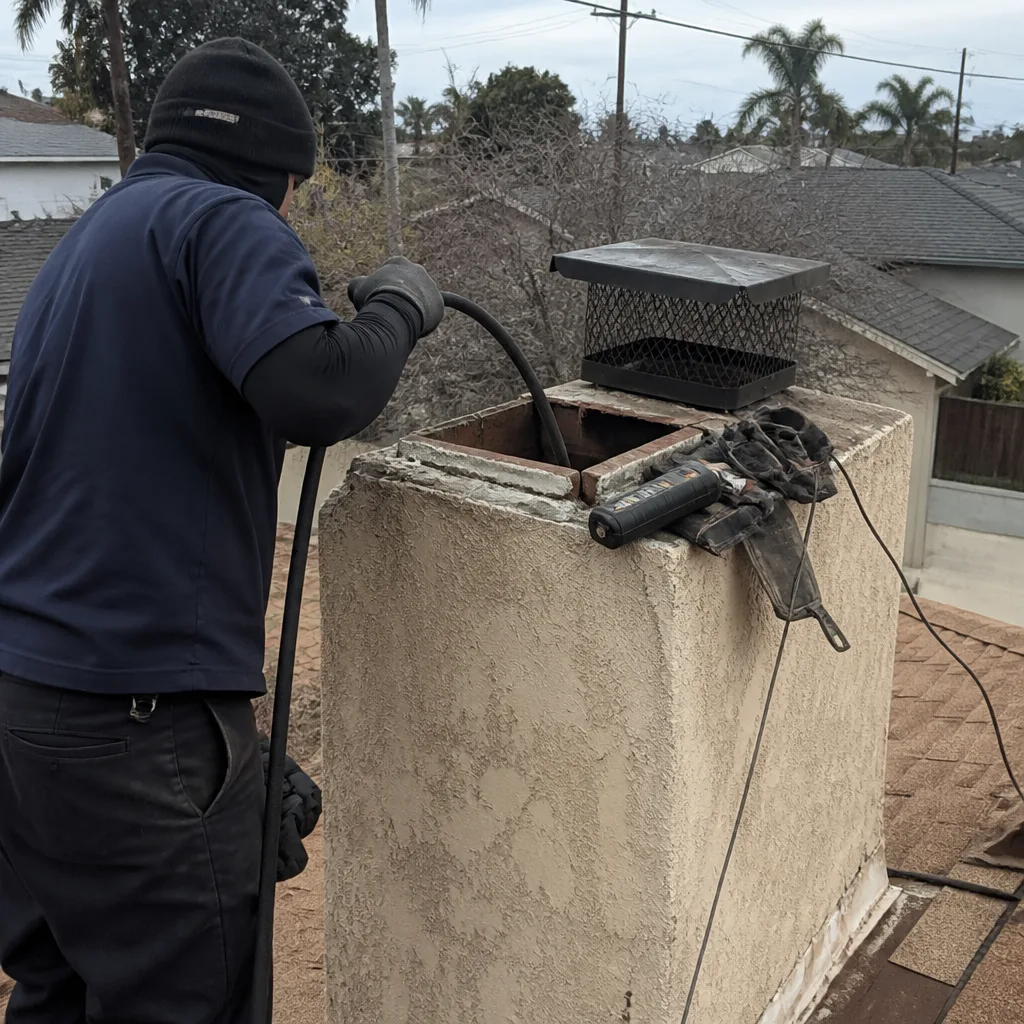 Before
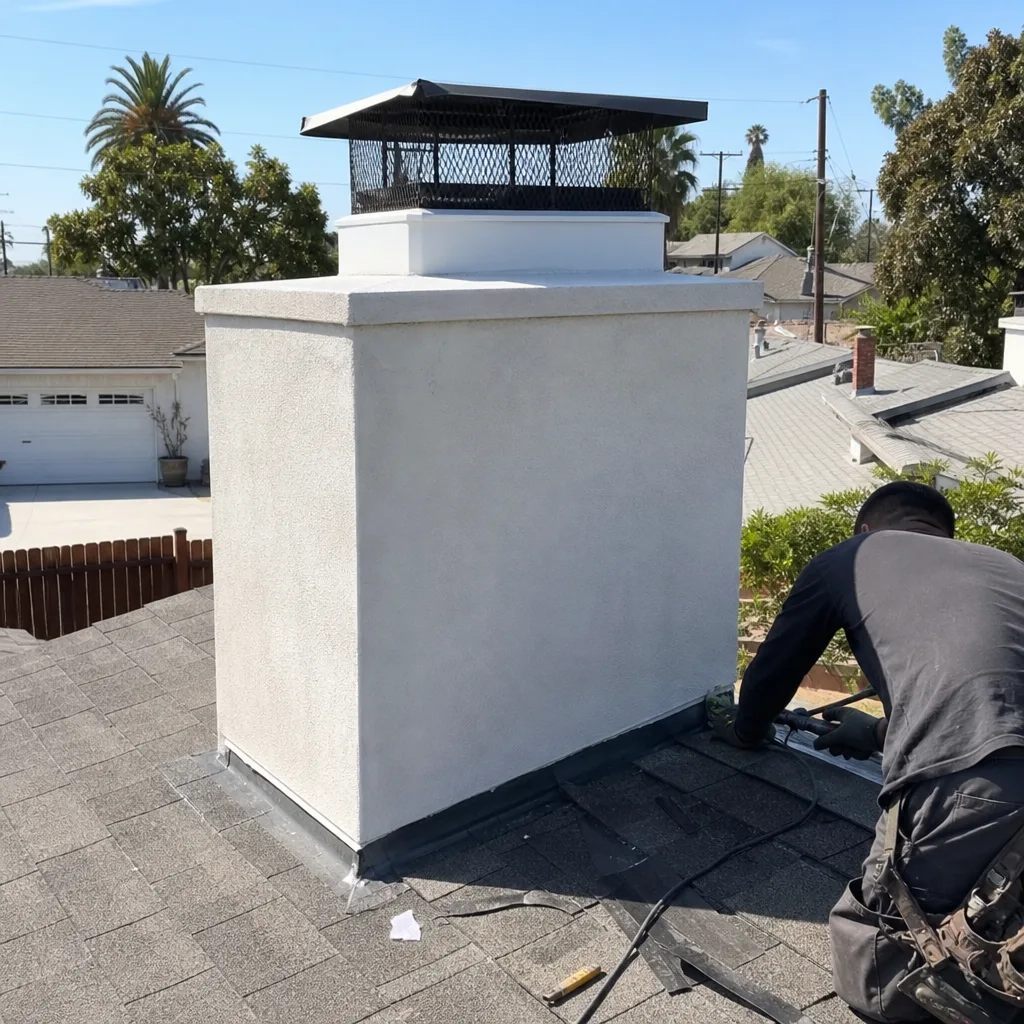 After
After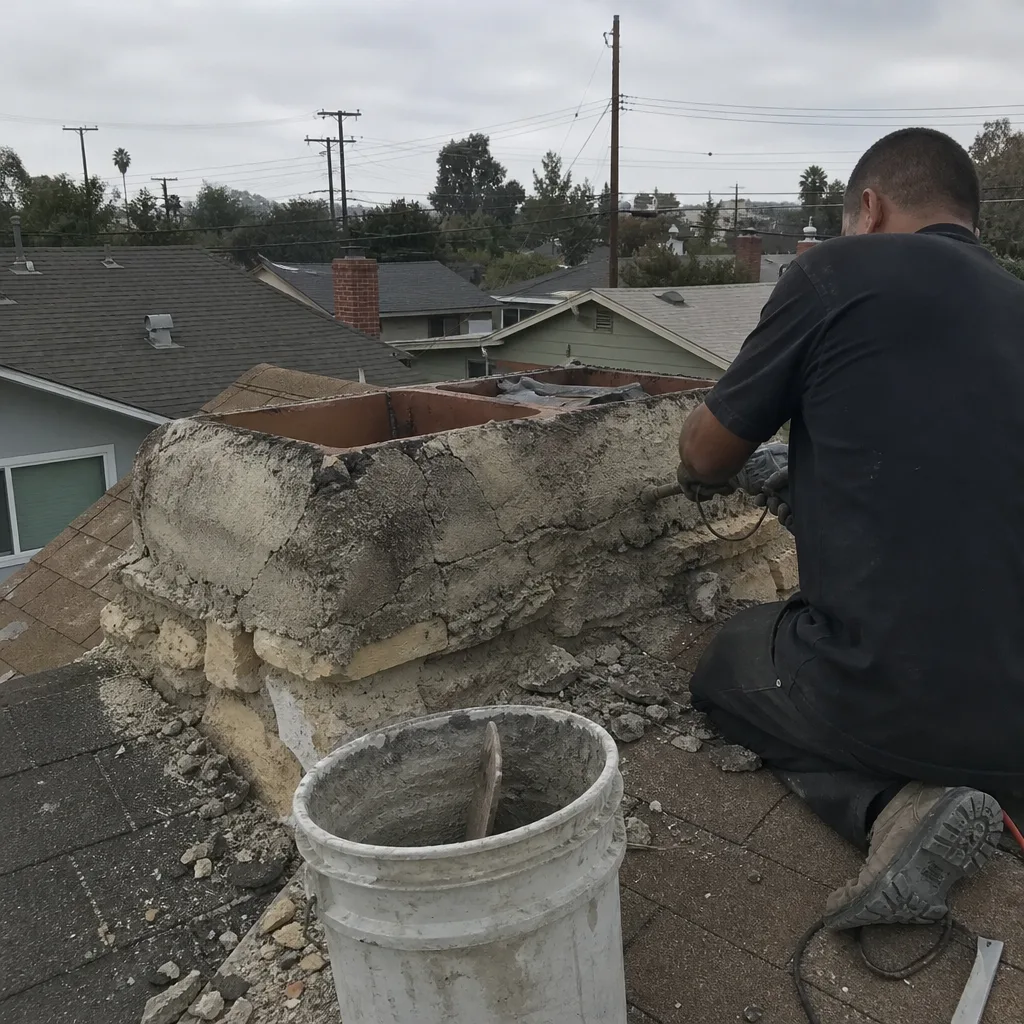 Before
 After
After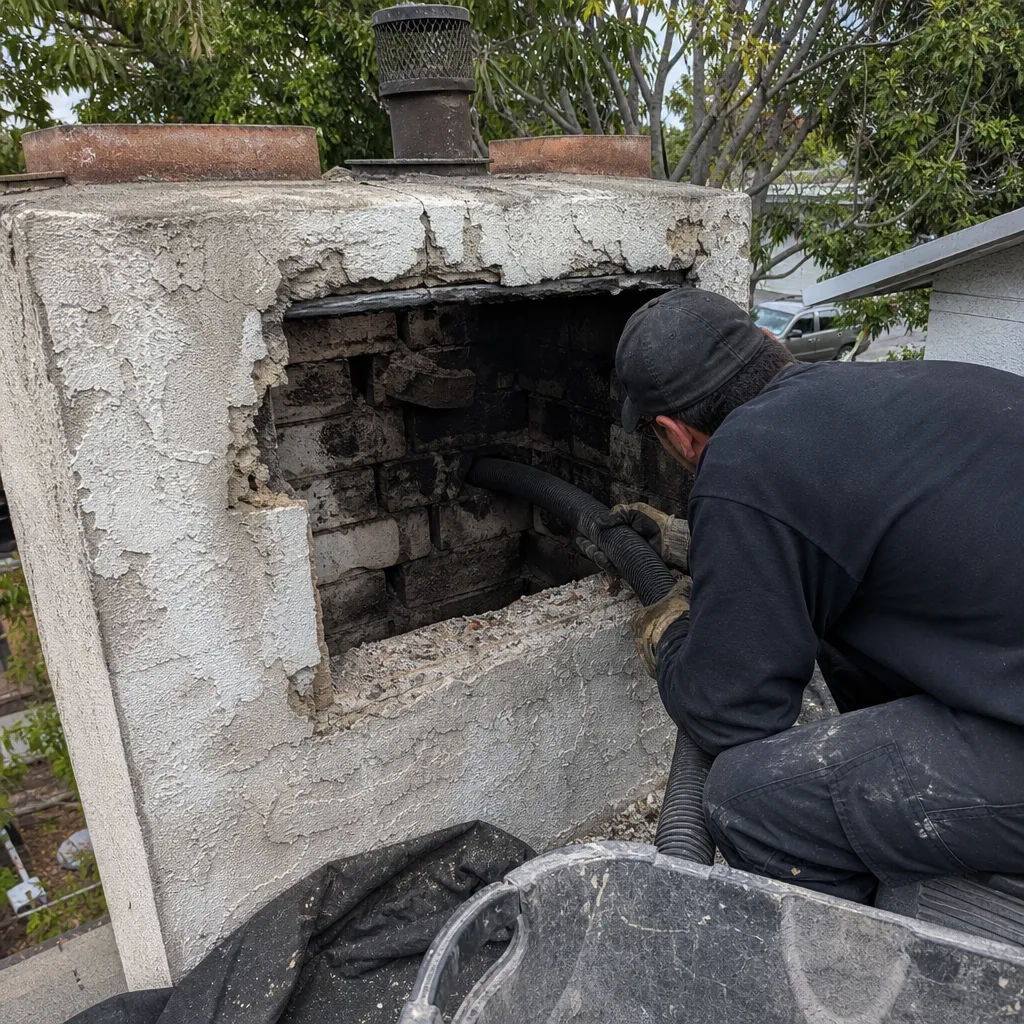 Before
 After
After