
 Gas fireplace service
 Sweep & inspection
 Caps & crowns
 Flue relining
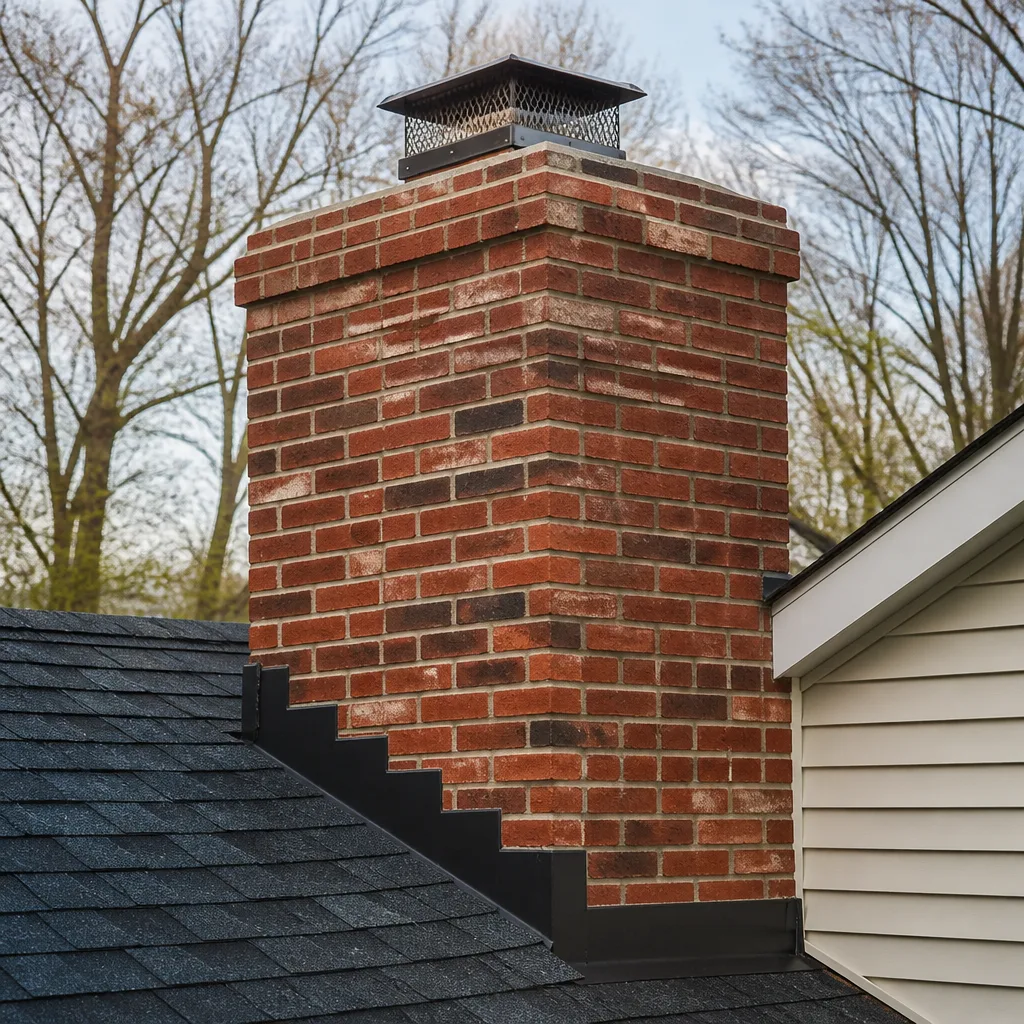 Masonry repair
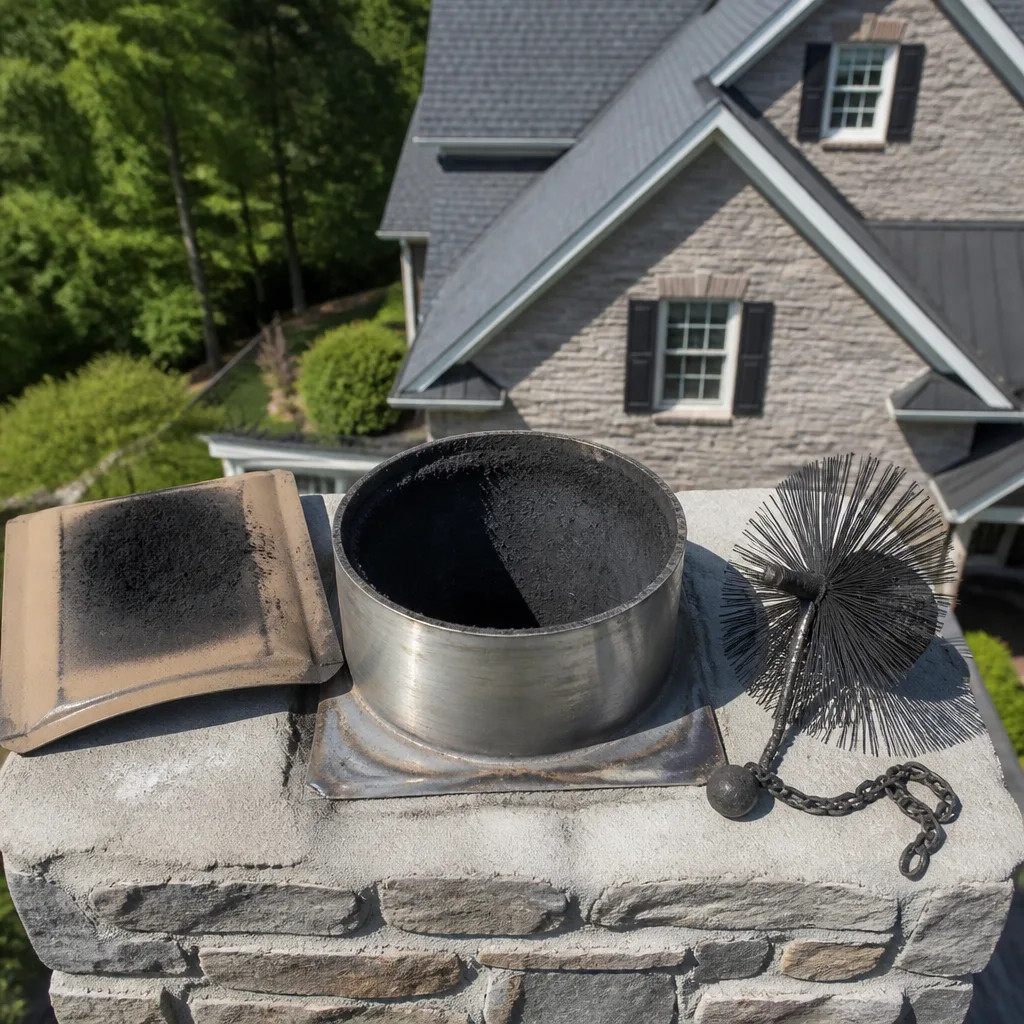
Level 1 sweep and inspection to the NFPA 211 annual standard - flue, crown, cap, and flashing checked and photographed
Chimney sweep logs do not sweep chimneys. They loosen some creosote - which then falls where a brush and vacuum still have to collect it.
Why Long Beach Homeowners Choose HeatShield Chimney Cleaning
We provide independent Heatshield service in Long Beach, including chimney cleaning, inspection, and repair, with hands-on experience in the Cerfractory and Hybrid liner systems. Our HeatShield work is grounded in factory-specified application methods and honest diagnostics – if a coating is failing from salt air, we’ll show you the evidence before recommending anything. We’re not an authorized HeatShield dealer, but we’ve spent years servicing these systems in Long Beach homes and know precisely where they fail in this climate. Call (562) 317-7262 for a written quote before any tool comes off the truck.
HeatShield’s ceramic-based flue sealant was designed to restore cracked and deteriorating chimney liners without the cost of a full stainless steel replacement. In Long Beach, where the marine layer pushes salty moisture into masonry year-round, that coating faces a harder fight than it does inland. Hairline thermal cracks, spalling, and delamination all show up faster here. We know the failure patterns because we’ve repaired them in homes from Belmont Shore to Bixby Knolls. Our team approaches every HeatShield job with the same question first: is the existing coating still sound, or has moisture already gotten behind it?
As an independent HeatShield service provider, we’re not bound to any manufacturer’s sales targets. That means when a flue is too far gone for coating and a stainless liner is the honest answer, we’ll say so plainly. Hank Delano has built our Long Beach crew around a simple rule: clean flue, honest report – that’s the whole job.
Why Trust Flint Chimney Co Long Beach for Your HeatShield Chimney Cleaning?
HeatShield work succeeds or fails on prep. The Cerfractory material bonds only as well as the surface beneath it, and a shortcut during prep shows up within a few years as flaking, pitting, or a cold stripe along the flue wall. Our technicians have spent years inside Long Beach chimneys, and they’ve seen what happens when coating is applied over third-degree creosote or damp masonry. We don’t repeat those mistakes.
We use genuine HeatShield Cerfractory material and components on all coating work. Mixing in an aftermarket refractory product changes set time and adhesion, and the results in a salt-air environment are predictably poor. The 365-Day Done Right Promise applies to every HeatShield repair we perform: if it fails within one full year, we return at no charge and make it right. That promise is written on every invoice, not implied in a handshake.
Hank grew up in Los Angeles and learned trade fundamentals at Los Angeles Trade-Technical College before spending the better part of two decades on chimneys across Southern California. He keeps a wire brush collection in the back of his truck that he’d call embarrassingly large, but it means we always have the right tool for whatever flue we’re standing in front of. Every HeatShield service call in Long Beach gets a background-checked, uniformed technician and a written price before work begins, and we also offer Heatshield repair in Wilmington.
Styles & brands we work with
Common HeatShield Chimney Cleaning Problems We Fix in Long Beach
These are the HeatShield-specific failure patterns we see most often in Long Beach, not generic chimney issues. Each one has a distinct cause, and the repair approach is different.
- Spalling and pitting on Cerfractory smoke-chamber coatings. Moisture entering at the chimney crown soaks into the smoke chamber walls, and when the Cerfractory coating absorbs that water through micro-cracks, salt from the marine air accelerates the breakdown. The coating starts to flake away in small pieces. We see this in older 1920s stucco bungalows in central Long Beach where original masonry fireplaces were coated years ago and never re-sealed at the top. Fixing it requires removing the loose material, re-prepping the surface, and addressing the crown water entry that caused the failure in the first place.
- Hairline cracking at flue tile joints behind the HeatShield coating. Thermal expansion works the clay tile joints every time a fire is lit, even a casual evening fire in a Belmont Heights Craftsman. The HeatShield coating is strong, but it can’t hold back joint movement forever. Creosote collects in those hairline cracks and becomes a fire risk. This is a case where the coating may look fine on the surface but the underlying joint has failed – we inspect with a camera to see what’s happening behind the face.
- Corrosion on the stainless steel base layer of HeatShield Hybrid systems at the flue termination. This is the Long Beach signature failure, especially in Belmont Shore and Naples where homes sit close enough to the water that sea fog rolls in regularly. Chloride from the fog attacks the stainless base where it’s exposed at the top of the flue. We pulled a cap from a Belmont Shore chimney a few months back and found the stainless layer corroding under six years of fog exposure. The repair involved removing the damaged section and reapplying Cerfractory over the exposed tile joints.
- Delamination of the top coat over remaining creosote. If a HeatShield application is done without fully removing third-degree creosote first, the top coat will not bond. It peels away in sheets. This is a prep failure, not a material failure, and we correct it by stripping the flue back to a clean surface before any coating goes on. Our camera inspection catches this before we quote the repair, so the written price covers the real scope.
- Cracked or degraded crown coating on HeatShield Restore 100/200 Series applications. The Restore systems include a crown sealing step, but the elastomeric material breaks down faster in Long Beach’s year-round damp air than it does inland. Cracks open up in the crown, water gets behind the coated flue, and the whole system starts to fail from the top down. Reapplying the crown coating properly is a straightforward repair that can extend the life of an otherwise sound HeatShield installation by years.
HeatShield Parts & Our Repair-vs-Replace Approach
For all HeatShield coating work, we use genuine HeatShield Cerfractory material. That’s not a choice we make lightly, and it’s not about brand loyalty – mixing aftermarket refractory into a HeatShield repair changes how the material sets and how it bonds. In a flue that’s already under stress from Long Beach moisture, that difference matters. We won’t do it.
For ancillary components like caps and dampers, we take a different approach. HeatShield’s own hardware is good, but it’s not always cost-effective for a Long Beach homeowner. When a high-quality aftermarket cap or damper does the same job at a better price, we’ll fit it and tell you why. The decision is documented on your written quote, not hidden in the final invoice.
Repair vs. replace is the hardest call to make, and we make it honestly. If the flue tile joints are separated beyond what Cerfractory can bridge, or if the stainless base layer of a Hybrid system has corroded through in multiple spots, a full stainless steel liner installation will outlast another patch. That’s the truth we tell over the phone and in person. Call (562) 317-7262 and we’ll put the options in writing.
Our HeatShield Service Process – Step by Step
- 1
Camera diagnosis. Every HeatShield job starts with a camera inspection of the full flue length. We’re looking for spalling, hairline joint cracks, delamination, and moisture markings. In Long Beach, we pay special attention to the flue termination where fog-driven corrosion hits first.
- 2
Surface prep for the specific system. For Cerfractory coating, the flue must be clean of creosote and dry. For a Hybrid repair, we remove the corroded stainless section and expose the tile joints that need sealing. Skipping this step is why we’re called to fix other companies’ work.
- 3
Application and curing. We apply HeatShield material to the exact specifications for the system involved – Joint Repair, Restore 100, Restore 200, or Hybrid repair. Cure time is respected, not rushed. That matters in a damp coastal climate where adhesion is already working against the moisture in the air.
- 4
Crown and termination reseal. No HeatShield repair in Long Beach is complete without addressing the crown and flue termination. If water is still coming in from the top, the coating will fail again. We seal the crown with an elastomeric coating as part of the repair scope.
- 5
Camera verification and written warranty. We run the camera back through before we leave, show you the finished result, and hand over the written 365-Day Done Right Promise. If a covered repair fails within a year, we return at no charge.
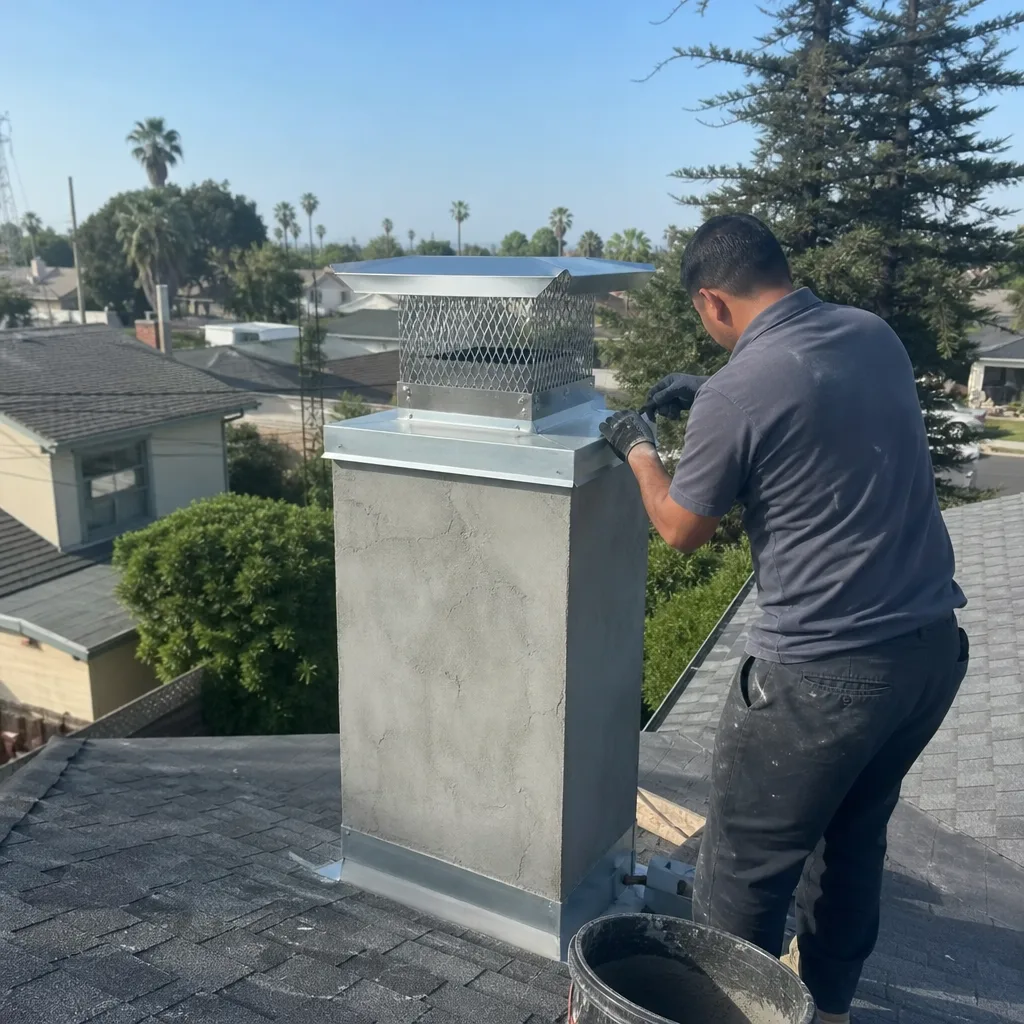
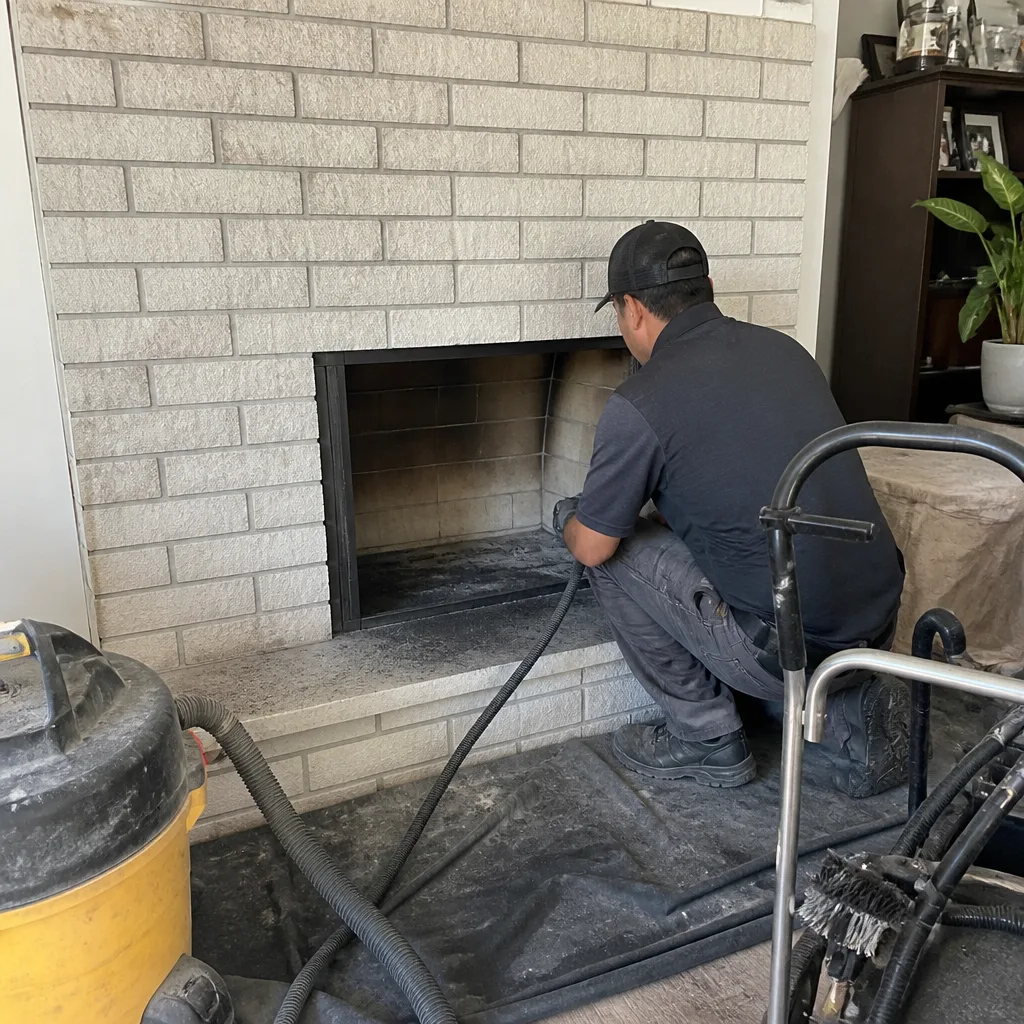
See the difference
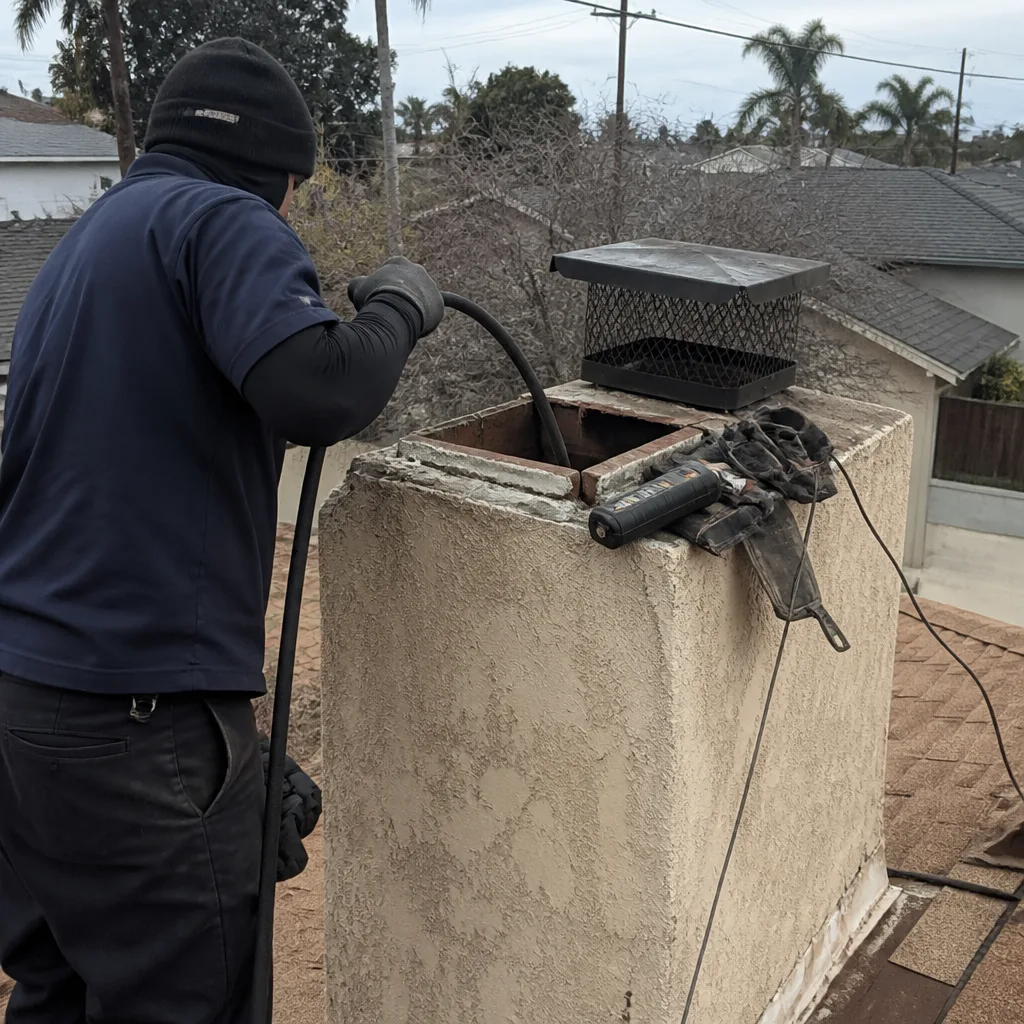 Before
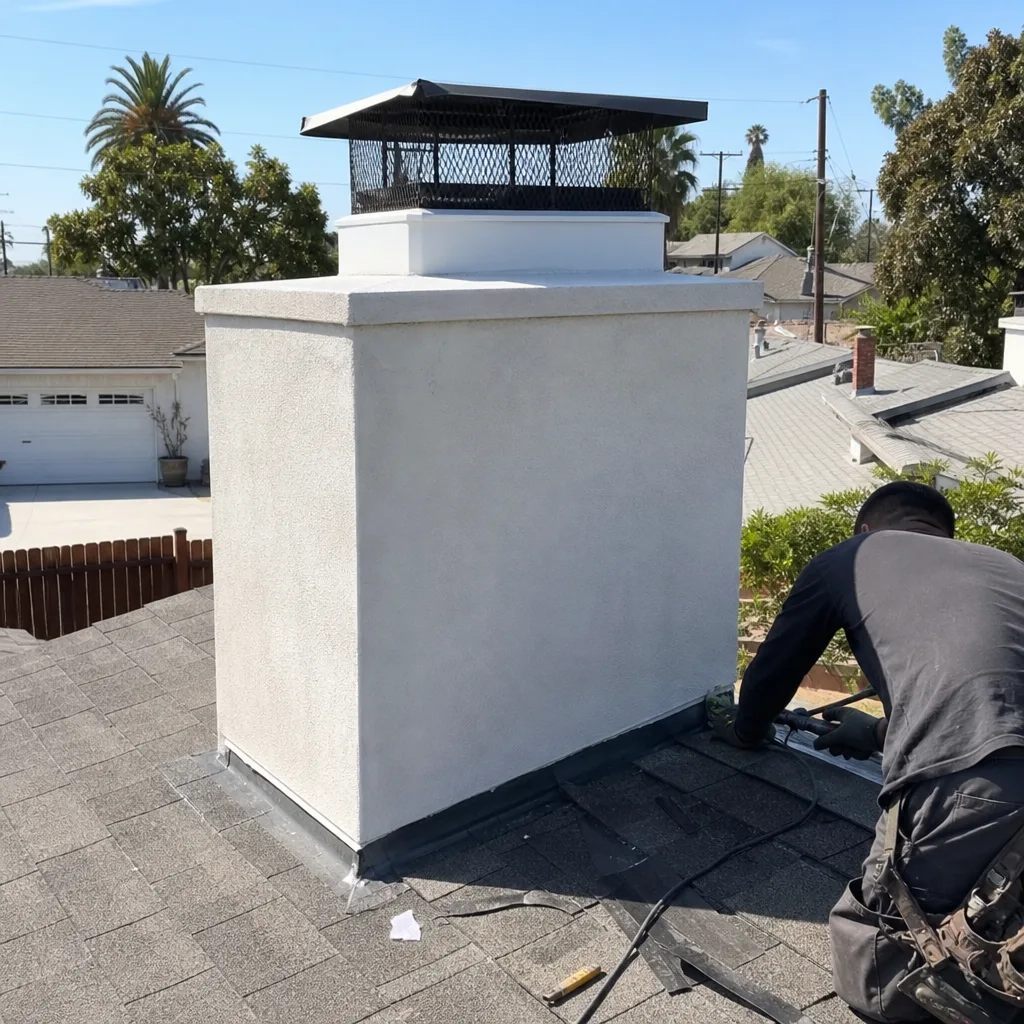 After
After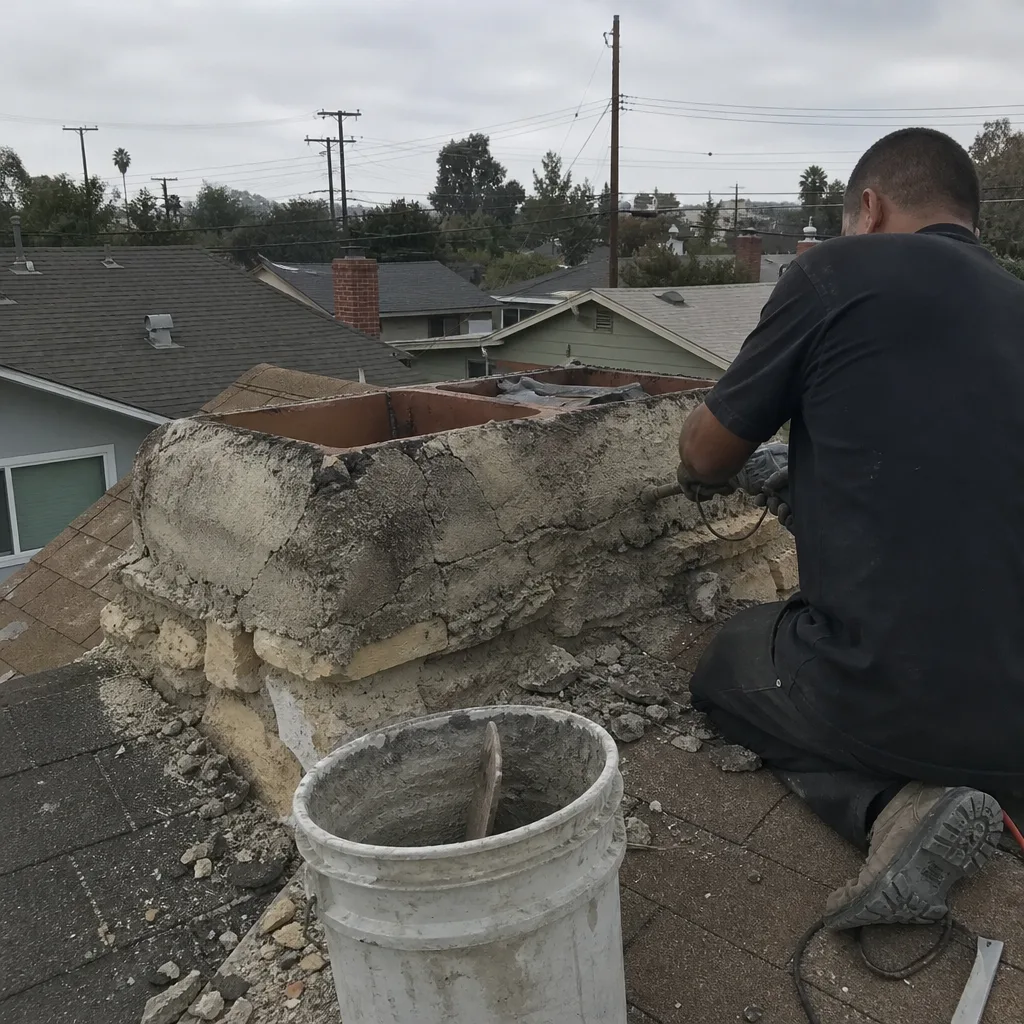 Before
 After
After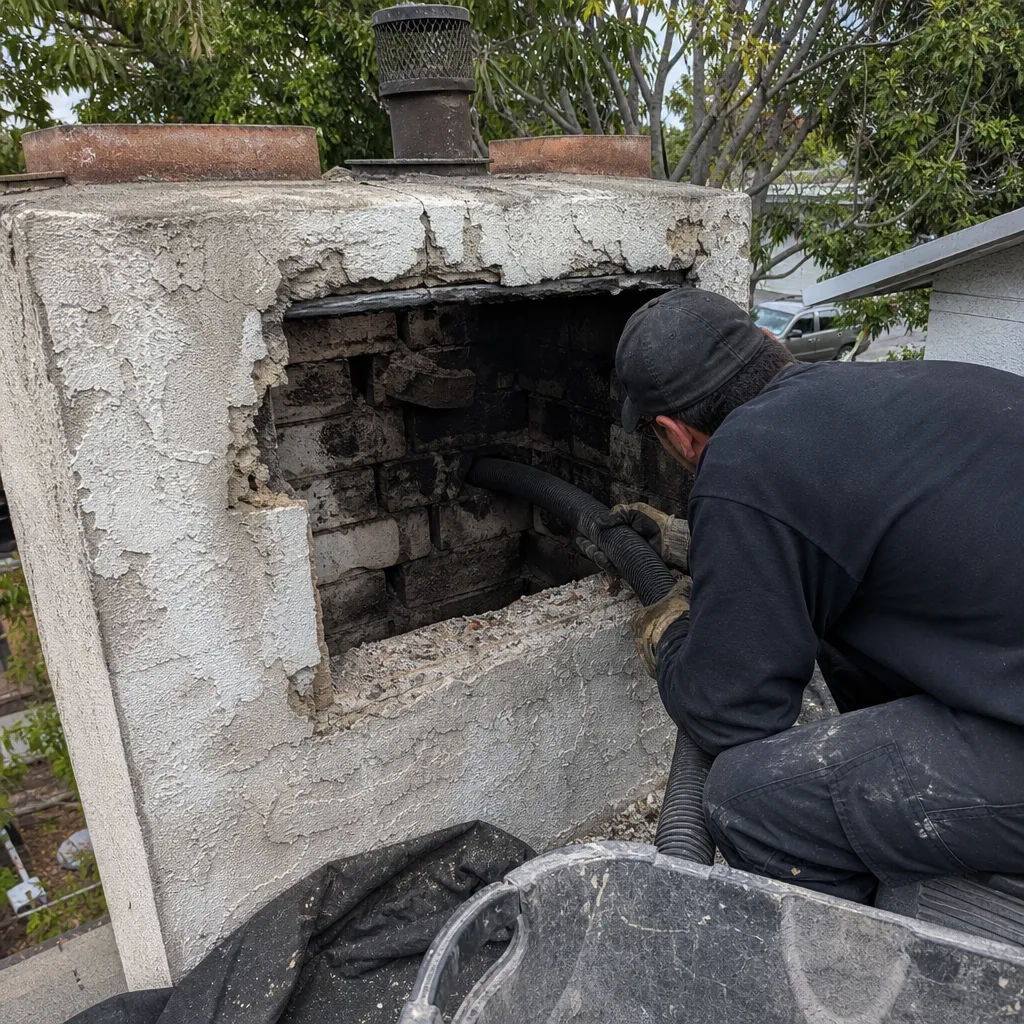 Before
 After
AfterHeatShield Products We Service & Install in Long Beach
Our team works with the four primary HeatShield product lines: HeatShield Cerfractory Flue Sealant, the ceramic-based coating that restores cracked clay tile liners; HeatShield Hybrid Liner System, which pairs a stainless steel base with the Cerfractory coating; HeatShield Joint Repair System, the targeted fix for separated tile joints; and the HeatShield Restore 100/200 Series, which addresses larger flue wall failures. We stock the Cerfractory material and joint repair compounds needed for most Long Beach callouts and Heatshield repair in Lakewood, which means we can often quote and schedule a repair without waiting on a shipment.
We Also Service These Brands
HeatShield is one system in a larger toolbox. We also work with DuraFlex stainless steel liners and Gelco chimney products on a regular basis in Long Beach, and we specify the material that fits the job, not the one we happen to stock. Our multi-brand experience means we can compare a HeatShield repair against a DuraFlex liner replacement honestly, with real numbers for both.
FAQs – HeatShield Chimney Cleaning Service in Long Beach
You won’t see smoke until the failure is advanced, so the reliable way to catch it early is a camera inspection. Look for flaking or pitting on the coating surface that’s visible from the top of the flue with a flashlight. Efflorescence on the exterior brick face is another early sign in Long Beach, because salt-laden moisture is wicking through the masonry and pushing minerals to the surface. A musty smell from the fireplace in the damp months is also worth checking – it means water is getting in somewhere. Call (562) 317-7262 and we’ll inspect it with a camera before you spend a dollar on repairs.
Yes, and then some. A stainless liner installation needs a clean flue, but a HeatShield coating needs a clean and dry flue because the Cerfractory material bonds directly to the tile surface. Any creosote left behind, especially third-degree glazed creosote, will cause the coating to delaminate within a year or two. We prep by removing all creosote deposits and drying the flue before application. In Long Beach’s damp climate, that drying step is not optional.
Sometimes, but not always. If the pitting is superficial and the liner’s structural integrity is intact, a HeatShield Coating can help slow the corrosion. But HeatShield over a severely pitted or perforated stainless liner masked the problem, it doesn’t fix it. In Long Beach, chloride corrosion at the flue termination can eat through stainless in a matter of years, and coating over a failing liner only buys you time while the underlying metal keeps breaking down. We’ll tell you the truth after a camera inspection.
A Joint Repair System targets the seams where flue tile sections meet, sealing the gaps that develop from thermal expansion and seismic shifting. It’s a localized fix for a localized problem. A Restore 200 coating is the full-length ceramic resurfacing of the entire flue wall, used when the tile faces themselves are cracked, pitted, or spalling across a large portion of the flue. The joint repair costs less and takes less time, but it won’t fix widespread tile failure. A camera inspection tells you which one you actually need.
The crown is the chimney’s top surface, and in Long Beach it’s the first point of attack for salt-laden fog and damp air. The elastomeric sealant used to crown-coat a HeatShield installation can crack and degrade in as little as five to seven years here, compared to ten or more in drier inland climates. Moisture gets through those cracks, soaks the masonry, and works its way behind the HeatShield coating. Reapplying and sealing the crown on schedule is the best thing you can do to protect the system. Call (562) 317-7262 for an assessment.
Our Chimney Sweep services and inspection for a HeatShield-coated flue in Long Beach typically run $200 to $400, depending on the flue length and the amount of creosote present. A HeatShield Joint Repair or localized Cerfractory touch-up usually falls in the $800 to $1,800 range. A full Restore 200 coating of a typical residential flue in Long Beach runs $3,000 to $6,000, which is still often less than a full stainless steel liner replacement at $5,000 to $8,000. Every job gets a written quote before work begins, so the number on the invoice is the number you approved. Call (562) 317-7262 for an exact price on your chimney.
No, we are an independent HeatShield service provider, not an authorized dealer or installer. That independence is why you’ll get an honest repair-vs-replace comparison from us. We use genuine HeatShield material because it performs, not because a manufacturer requires us to. And if your chimney is better served by a different system, we’ll tell you that plainly.
For the Cerfractory coating material and Joint Repair compounds, we use genuine HeatShield products exclusively. Mixing aftermarket refractory products with HeatShield-specific applications changes set time and adhesion, and in Long Beach’s salt-air conditions that’s a failure waiting to happen. For ancillary parts like caps and dampers, we fit quality aftermarket components when they perform as well as or better than HeatShield’s own hardware at a better price.
A camera inspection and cleaning usually takes two to three hours. A localized Joint Repair runs about half a day. A full Restore 200 coating of a residential flue in Long Beach takes a full day, sometimes two if the flue needs extensive drying time first. We won’t rush the cure time on Cerfractory, because the adhesion you get in damp coastal air depends on patience. We’ll tell you the schedule before we start.
We service and install the HeatShield Cerfractory Flue Sealant, the Hybrid Liner System, the Joint Repair System, and the Restore 100 and 200 Series. If you have a different HeatShield product or you’re not sure what’s in your chimney, call (562) 317-7262 and we’ll identify it during the inspection.
It should not. We follow factory-specified application methods and use genuine HeatShield materials for all coating work. But if your HeatShield system is still under a manufacturer’s warranty, the best move is to check the warranty terms and contact the manufacturer before any independent service is done. We’ll work with you on that, and we’ll document the condition of the flue before and after our work.
Book Your HeatShield Service in Long Beach, CA
If you have a HeatShield chimney system in Long Beach that’s due for cleaning, inspection, or repair, call (562) 317-7262 now. A live person answers the phone 24/7, and every job gets a written price before any work begins. If a covered repair fails within a year, we return at no charge. That’s the Garrison Standard, and it’s how we’ve been working in Long Beach since 2002.
Written by Hank Delano, Owner at Flint Chimney Co Long Beach, serving Long Beach since 2002.