
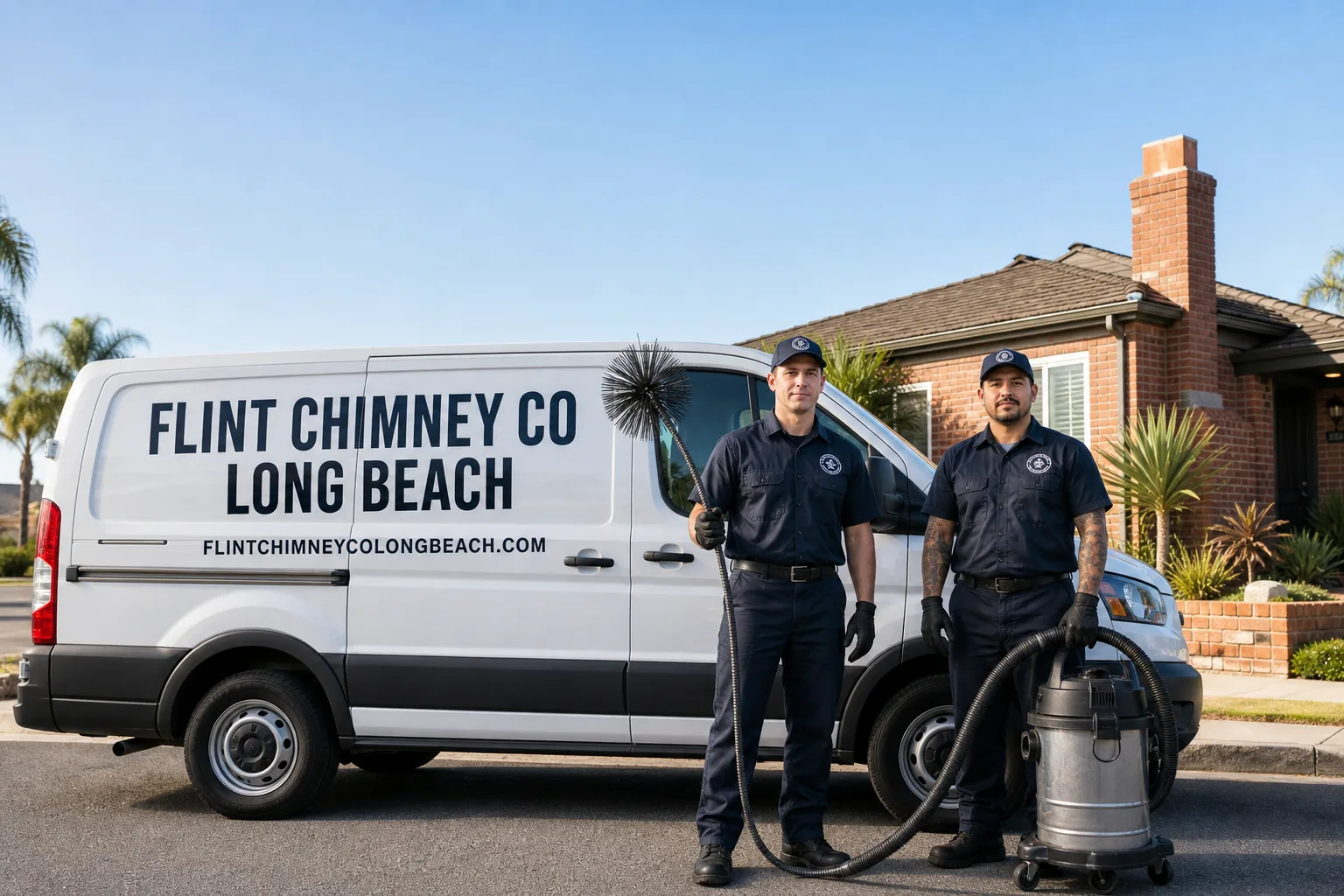
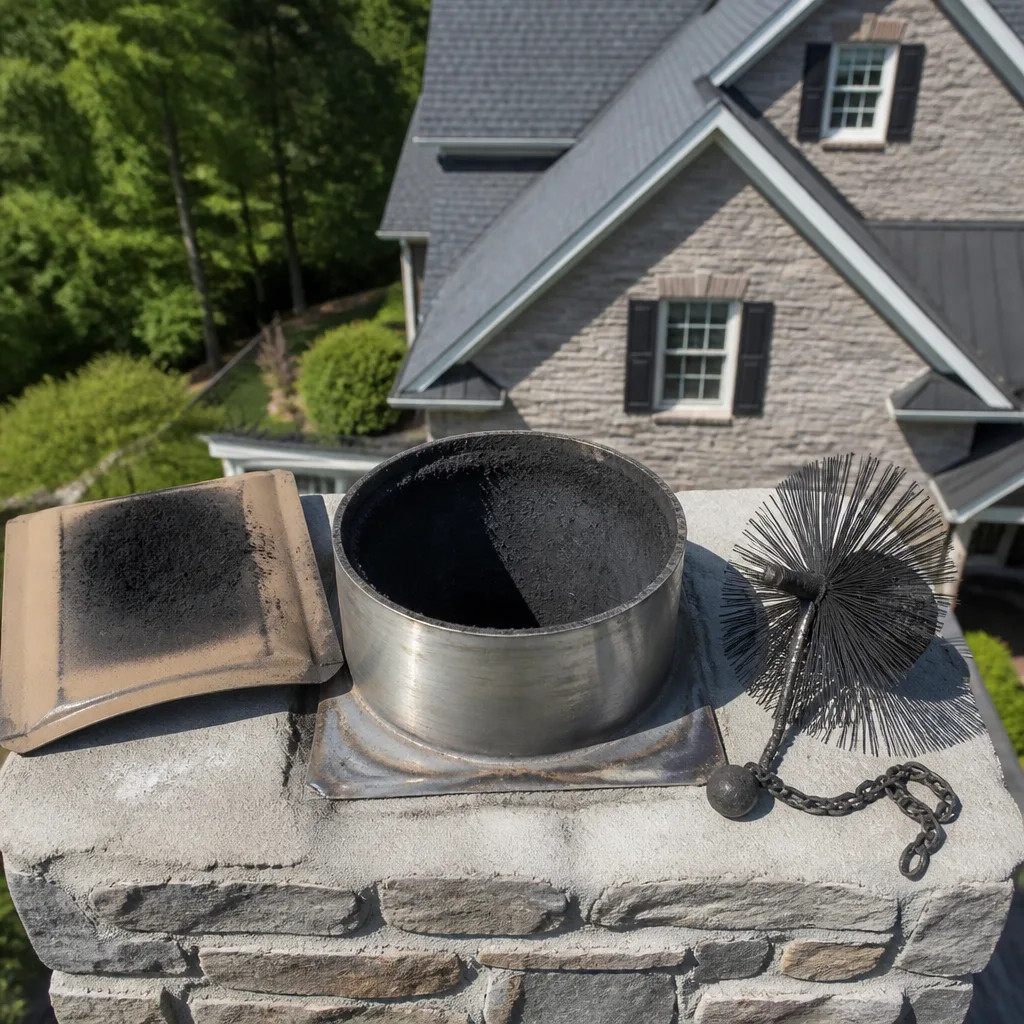
 Sweep & inspection
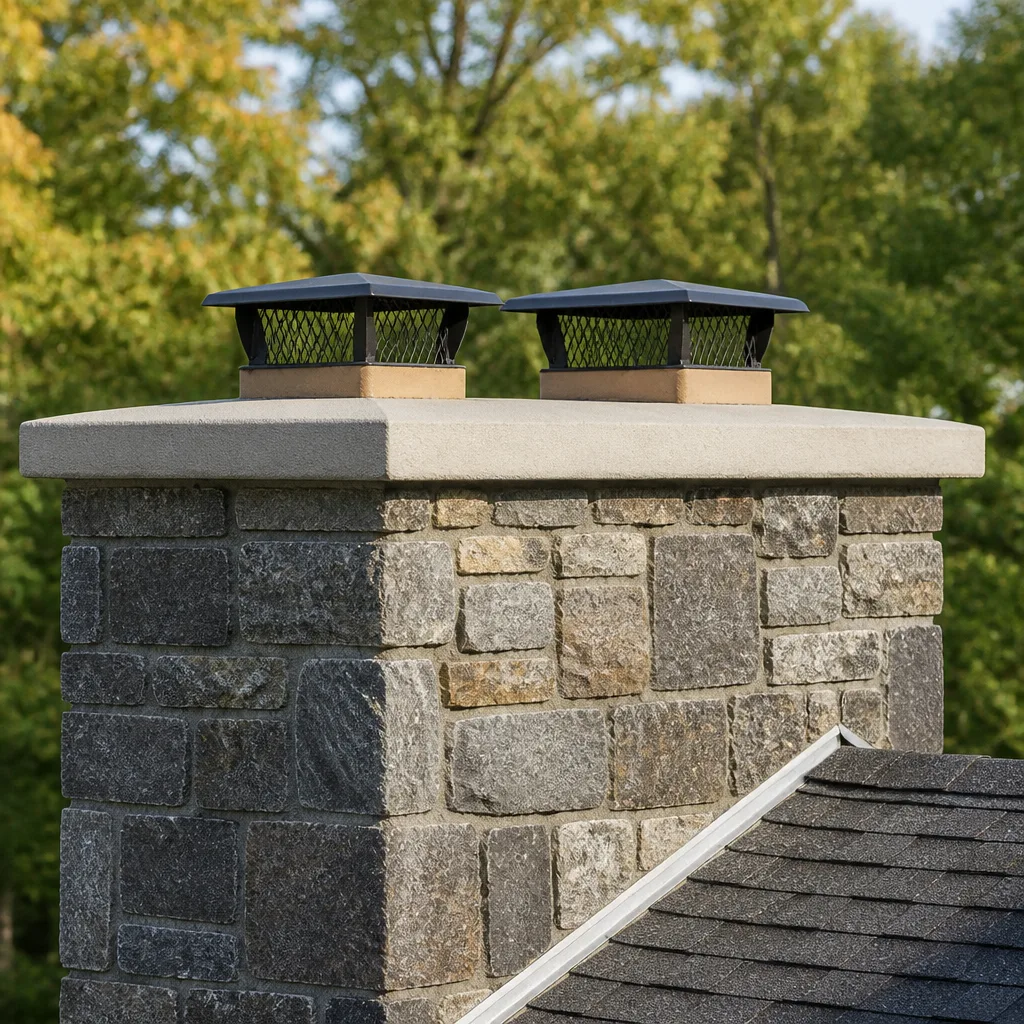 Caps & crowns
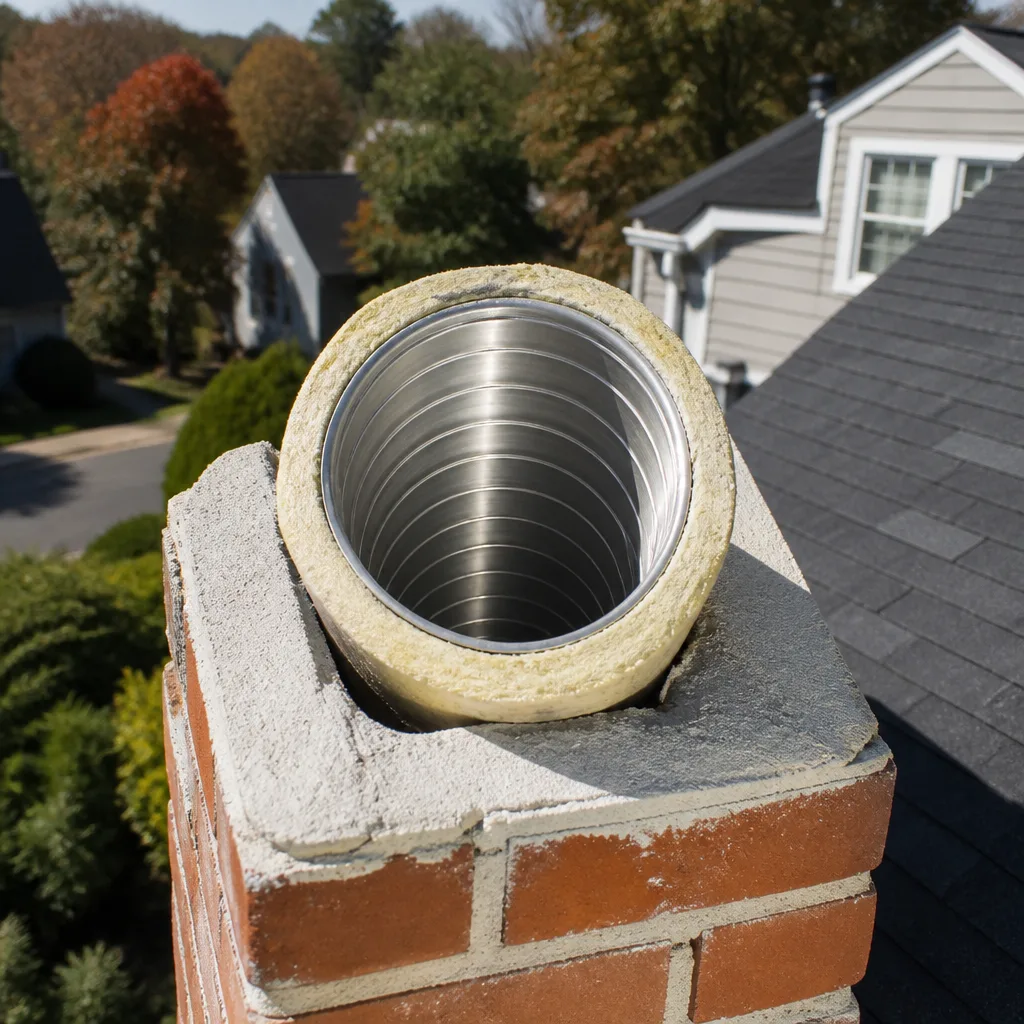 Flue relining
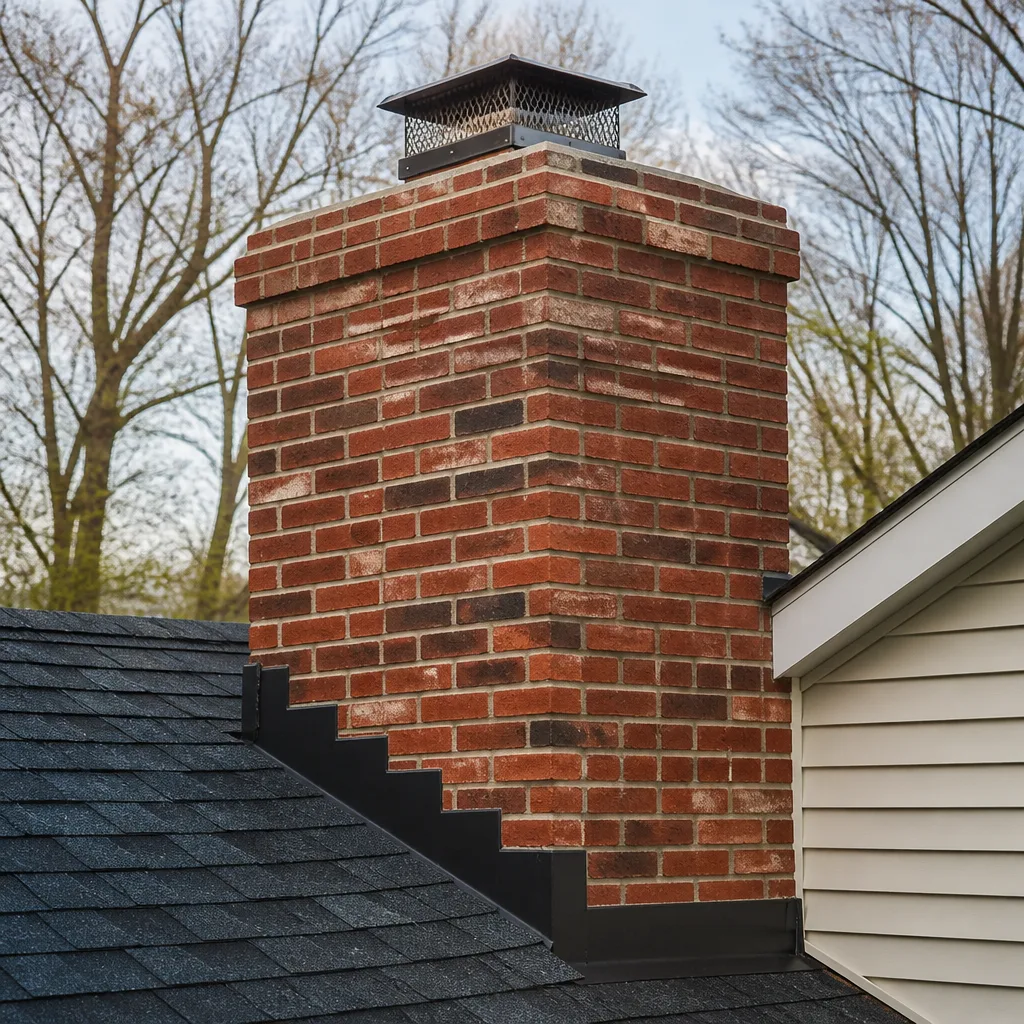 Masonry repair
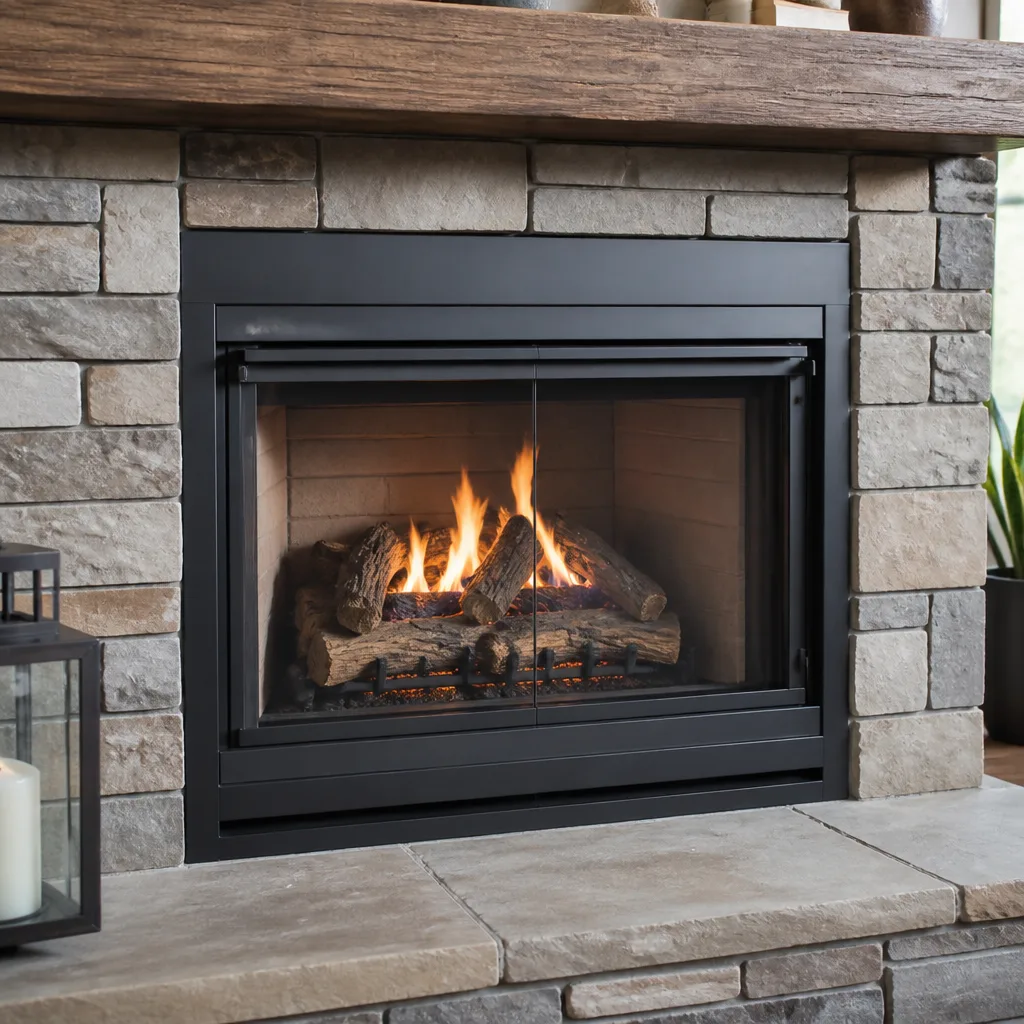 Gas fireplace service
Level 1 sweep and inspection to the NFPA 211 annual standard - flue, crown, cap, and flashing checked and photographed
Chimney sweep logs do not sweep chimneys. They loosen some creosote - which then falls where a brush and vacuum still have to collect it.
Fast, Reliable Chimney Inspection Across Seal Beach
A standard chimney inspection in Seal Beach runs $149 – $249, and if your home sits in Old Town, The Hill, or anywhere else in the 90740 ZIP, we’ll have a background-checked, uniformed technician at your door with a written price in hand before any tool comes off the truck. We know Seal Beach’s homes: the 1920s beach cottages with original masonry, the attached bungalows that share chimney stacks, the newer condos off Pacific Coast Highway where salt spray eats through chimney caps years before the liner gives out. That local knowledge is why a Seal Beach inspection needs to look for things an inland checklist would miss. Call (562) 317-7262 and a live person answers, 24 hours a day.
Why Flint Chimney Co Long Beach Is Seal Beach’s Preferred Chimney Inspection Company
Flint Chimney Co Long Beach operates under The Garrison Standard, the same code every Garrison Partners location follows since 2002: put the price in writing before work starts, stand behind every repair with a 365-Day Done Right Promise, and send uniformed, background-checked technicians who show up inside the window given. We don’t do price changes at the door. We don’t do no-shows. We don’t do vague verbal estimates. That matters in Seal Beach, where a lot of homeowners have dealt with the other kind of chimney company and learned the hard way what “trust me” costs.
Seal Beach is a small city, and reputation travels fast. Our Chimney Inspection team has scoped flues from The Hill to College Park East, and we know the housing stock cold: shared stacks in attached cottages, salt-corroded caps on ocean-facing roofs, narrow flues in 1950s ranch homes that haven’t been opened in a decade. When a client on a quiet street near Main Street has a question about a neighbor’s venting crossing into their flue, we don’t have to look it up. We’ve seen it. That’s what local expertise means on a chimney inspection.
Dispatch and scheduling are coordinated from the brand’s Los Angeles office, and crews serve Seal Beach locally. You’ll get a real person on the phone, not a voicemail tree, and a written scope of work before anything starts.
Styles & brands we work with
Chimney Camera Inspection in Seal Beach
Chimney Camera Inspection in Seal Beach is what we recommend for nearly every older home here, because a visual-only check cannot see what’s happening inside a shared flue or behind a decade of salt-air exposure. We run a high-resolution camera up the full length of the flue and record what we find: creosote grade, cracks, gaps in liner joints, signs of water entry, and any crossover from a neighboring unit’s venting in attached properties. You see the footage yourself, on the spot, so you’re not taking anyone’s word for a thousand-dollar repair you can’t verify.
When to schedule one
Before you light the first fire of the season in a home you haven’t used the fireplace in for a year or more. Before you buy or sell a Seal Beach house. After you’ve burned a season of wood and want to know what actually built up inside. And any time another contractor tells you the flue needs work based on a look from the roof: get camera proof first.
What it costs here
A full Chimney Camera Inspection in Seal Beach typically runs $249 – $399 depending on flue height and roof access. When we scope a flue and find only minor first-degree creosote that’s safe to burn through the season, we’ll say so plainly. Nothing gets recommended without footage you watch yourself.
Fireplace Inspection in Seal Beach
Fireplace Inspection in Seal Beach is a focused check of the firebox, damper, hearth, and smoke chamber, not the full structural evaluation a Level 2 inspection covers. In a Seal Beach beach cottage built before 1960, this is where we often find the damper rusted shut by marine air, cracked firebrick behind the grate, or a smoke chamber that’s pulling air from a neighbor’s vent because the shared stack was never properly separated. The fireplace itself can look fine from the living room and be a real problem three feet up.
What we check
We open the damper and confirm it operates. We inspect firebrick for cracks and spalling from moisture absorbed through the chimney crown. We check the hearth clearance, the flue connection, and the smoke chamber for creosote accumulation that a lower-cost sweep might have missed. If roofline access is required, we schedule accordingly.
Seal Beach specifics
In attached housing along Ocean Avenue and Main Street, the fireplace inspection of one unit isn’t complete until we verify the adjacent flue isn’t cross-venting into it. That’s a two-flue scope in a shared stack, and it’s standard practice for us in Seal Beach. We also look closely at chimney caps and spark arrestors, because the salt in the marine layer eats galvanized steel in three to five years, and a rusted-out cap lets rain straight into the firebox.
Trusted Brands We Service in Seal Beach
When an inspection turns up a failed component, we install parts from brands we trust and our Seal Beach clients can verify independently: HeatShield for flue joint repairs, Gelco for chimney caps and chase covers built to hold up against coastal corrosion, and Olympia Chimney for replacement dampers and top-sealing units. We keep the common parts stocked for Seal Beach’s most typical homes, which means less waiting when your inspection reveals a problem and you want it fixed before the next damp week. We recommend materials by what the job needs, not by what’s on the truck.
Common Chimney Inspection Problems We See in Seal Beach Homes
- Salt corrosion on caps and spark arrestors. A galvanized chimney cap installed five years ago in an inland city would still be intact; on an ocean-facing Seal Beach roof, it’s often rusted through by year four. Inspectors trained on inland checklists miss this entirely.
- Shared-flue crossover in attached cottages. Old Town and The Hill have rows of attached 1920s-1960s bungalows where two or more units share a masonry chimney stack. When a neighbor’s water heater or furnace vents into the same stack, those gases can cross into your flue. A visual-only inspection reports “clear” while flue gases leak into a different firebox.
- Hardened first-degree creosote in rarely used fireplaces. Seal Beach’s mild winters mean fireplaces are used occasionally for ambiance, not daily for heat. Creosote that sits damp through the marine layer hardens into a glassy glaze that’s tougher to remove than the fluffy stuff you’d burn off inland.
- Spalling chimney crowns from moisture cycling. The persistent damp air and intermittent rain soak into masonry crowns, then dry out. Over decades, that cycle breaks down the mortar and concrete at the top of the chimney, which lets water penetrate the stack and cause structural weakening you can’t see until we camera-scope the flue.
See the difference
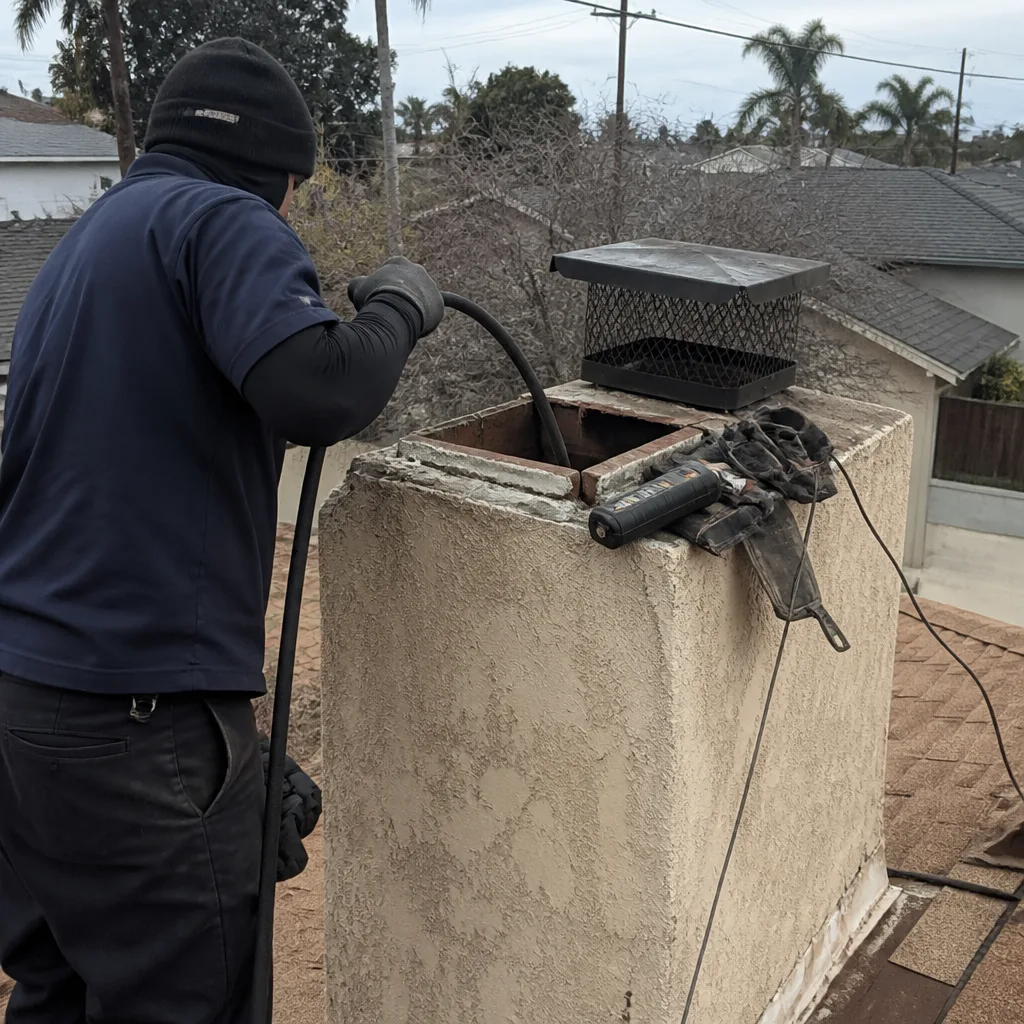 Before
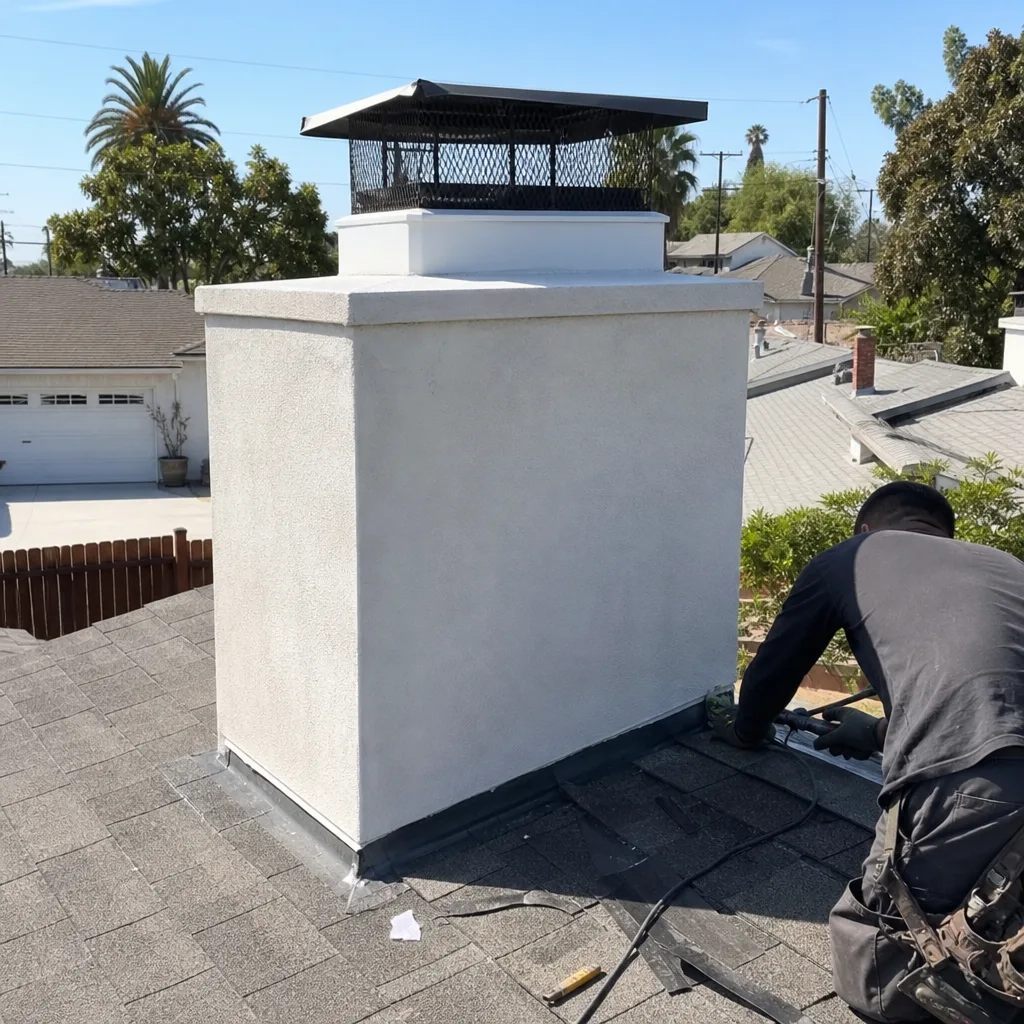 After
After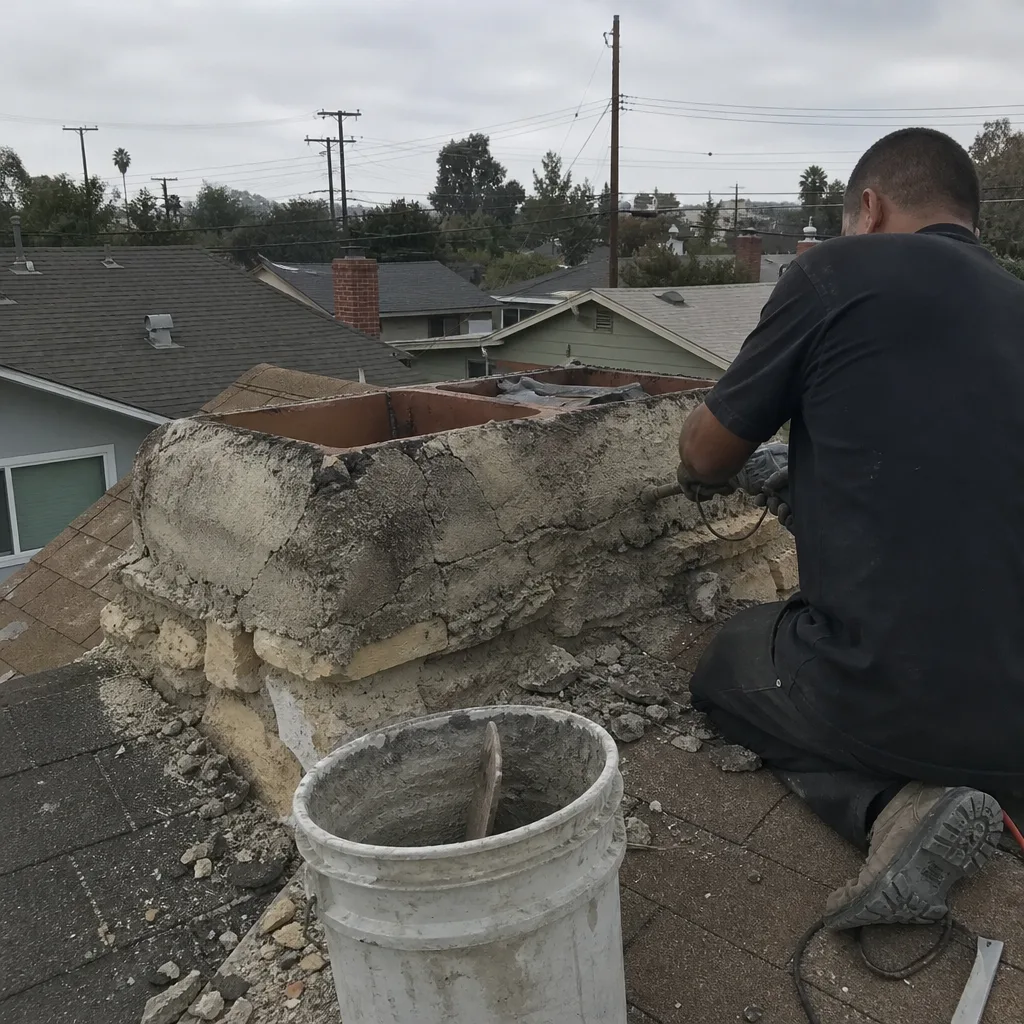 Before
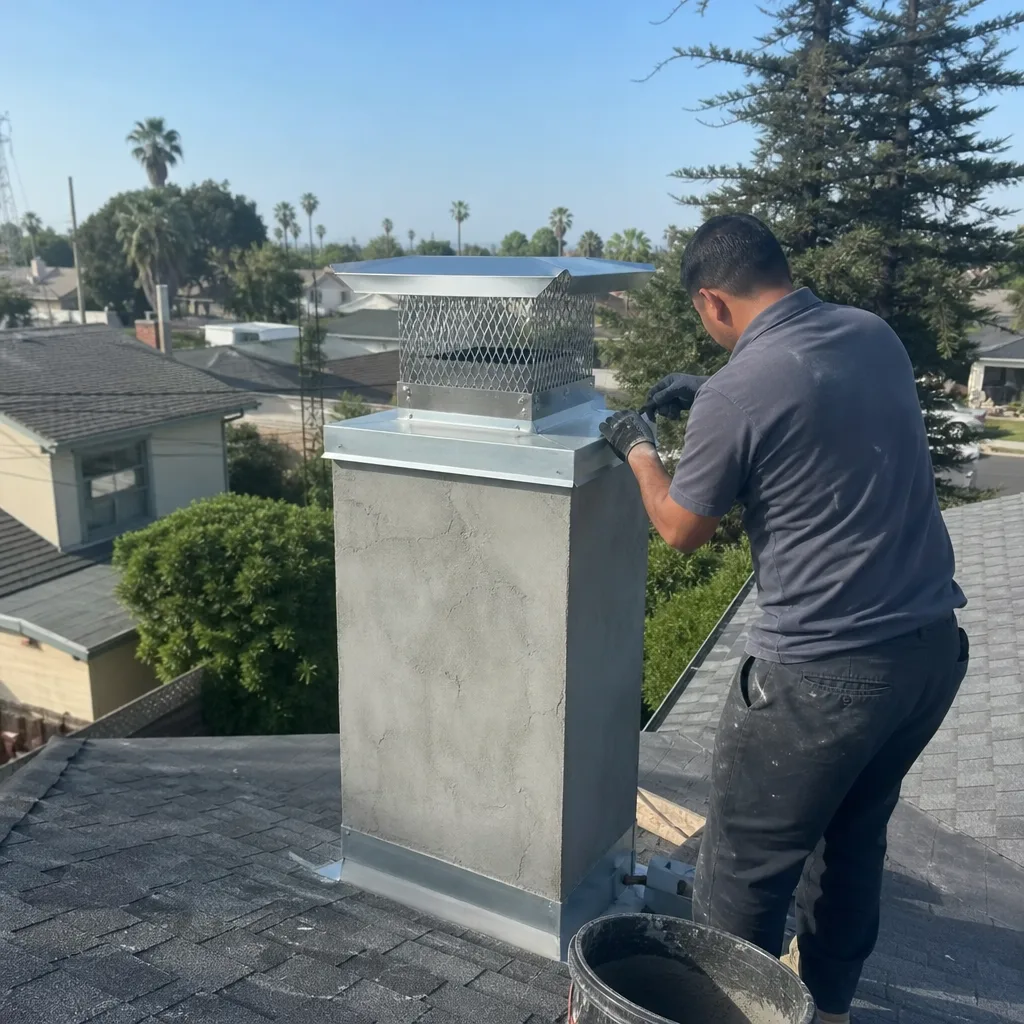 After
After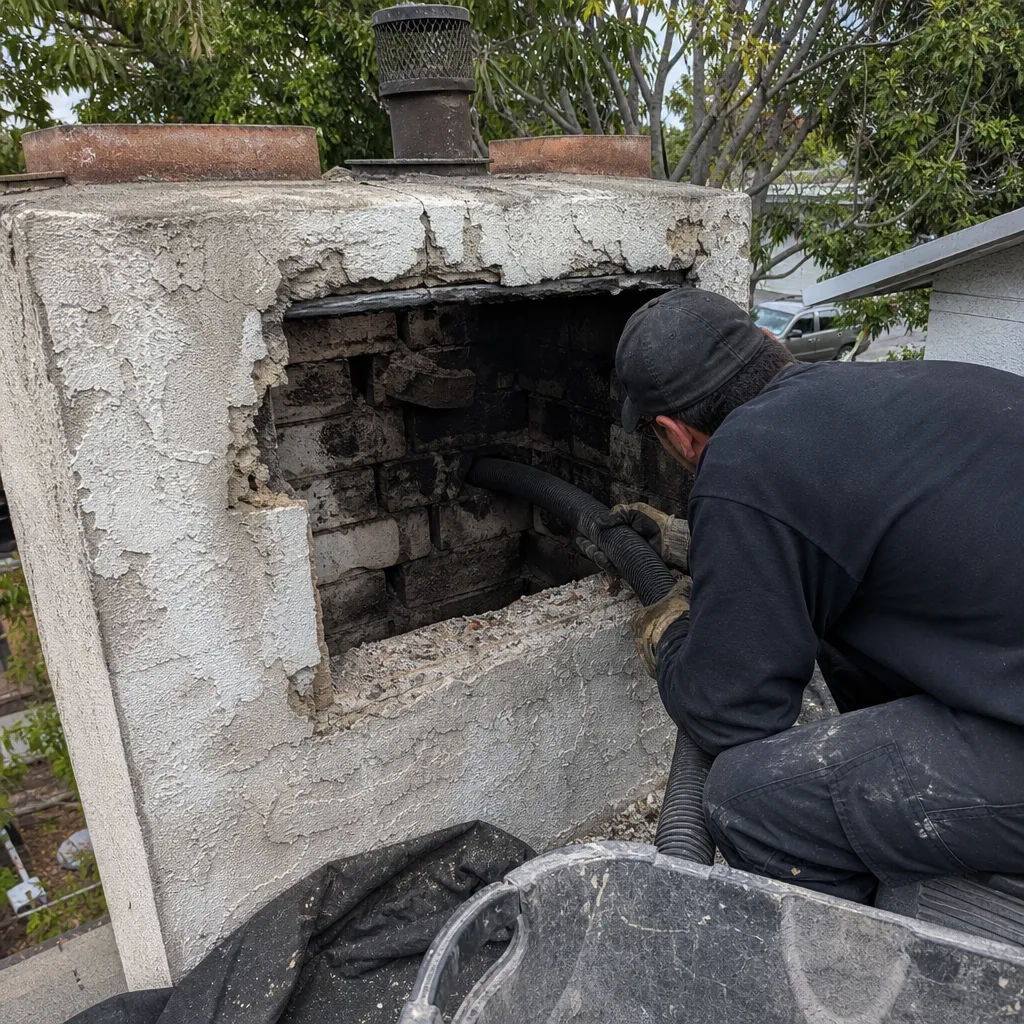 Before
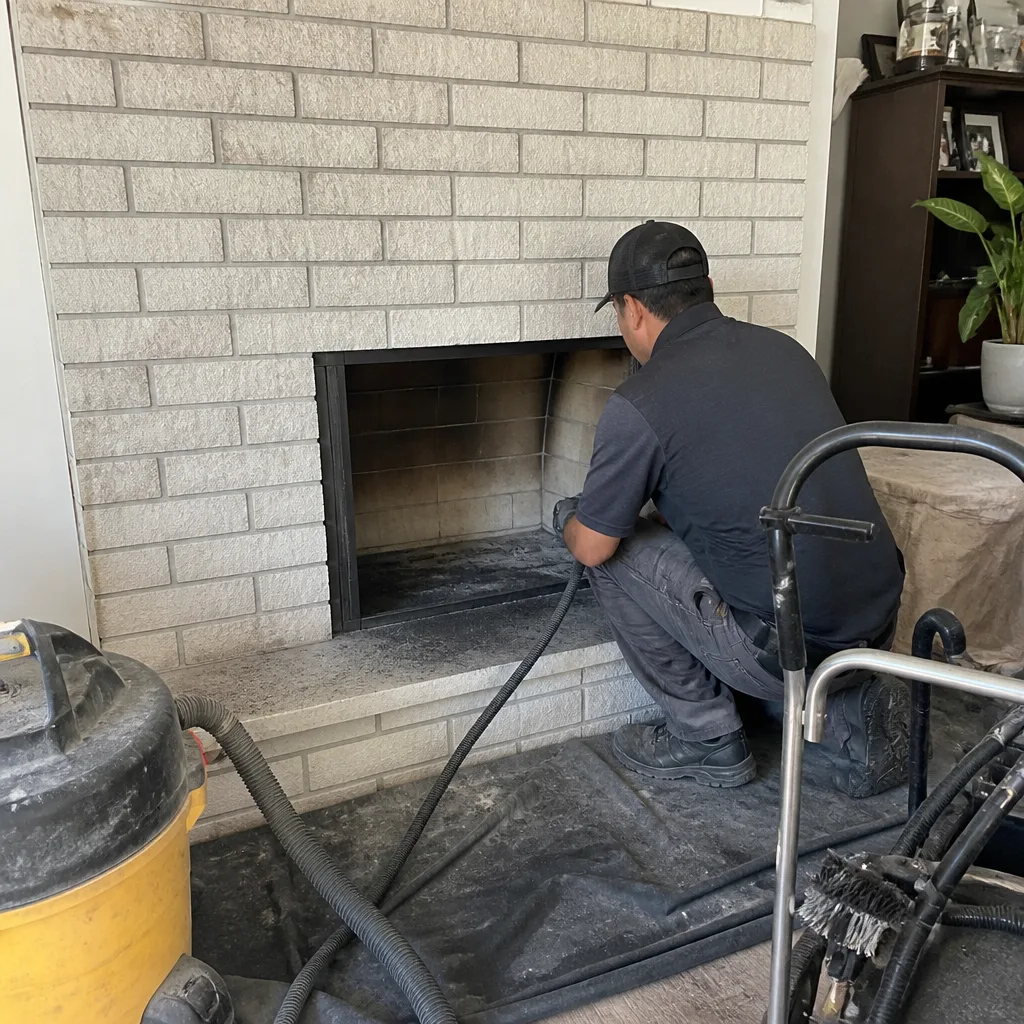 After
AfterPricing for Chimney Inspection in Seal Beach, CA
A visual Level 1 inspection in Seal Beach starts around $149 when combined with a sweep, and the Level 1 inspection alone typically runs $149 – $199. A Level 2 inspection, which includes the full camera scope and is our standard recommendation for older Seal Beach homes and real estate transactions, runs $249 – $399. A Level 3 inspection, which involves accessing concealed areas of the flue system and often requires breaking into a chase or opening the chimney structure, runs $800 – $1,500 depending on the extent of access needed. The factors that affect cost are flue height, roof access difficulty on narrow Seal Beach streets, whether the chimney is attached or shared, and whether the home is in a historic district where permit requirements and access methods are stricter. We give you a written price before any work begins, and the number on that page is the number on your invoice.
We Also Serve Cities Near Seal Beach
Our Seal Beach customers often ask if we cover the surrounding area. We do. Chimney Inspection in Seal Beach serves the city directly, and our crews also handle inspections in Cypress, Westminster, Stanton, and Long Beach, with the same written pricing and 365-Day Done Right Promise on every repair. If you’re on the border or just outside, call (562) 317-7262 and we’ll confirm coverage and schedule the same week.
Serving Seal Beach, CA - Our Local Coverage Area
We’re based in the Seal Beach area and know this community well. Use the map below to see our service coverage - if you’re nearby, we can almost certainly help.
FAQs About Chimney Inspection in Seal Beach
Yes, and in Seal Beach the answer matters more than inland precisely because you burn infrequently. The marine layer keeps creosote from drying out, so it hardens into a glaze that builds up over several seasons of occasional use. Worse, salt spray on your chimney cap and spark arrestor can rust them through while the fireplace sits unused, letting water into a firebox you won’t open again until winter. An annual inspection catches both problems cheaply. Call (562) 317-7262 for an exact quote, estimates are free.
Salt corrosion. Within a few miles of the Pacific, the airborne salt eats through galvanized steel chimney caps, spark arrestors, and flashing at a rate you won’t find five miles inland in Cypress or Westminster. A cap that would last 15 years in Stanton can fail in four on The Hill. Our inspection specifically looks for coastal rust on every metal component at the top of the stack, because an inland-oriented checklist often doesn’t.
If you live in Old Town or The Hill, your chimney may share or adjoin a stack with the neighboring unit. That means our inspection has to verify both flues in the stack and check for crossover: a neighbor’s water heater or furnace venting into your flue instead of its own. We’ve found this on 1920s cottages where the shared stack was never properly separated. A standard single-flue inspection will miss it entirely, which is why we camera-scope attached properties differently than we do detached ones.
Yes. We work off narrow streets and tight alleys in Old Town and The Hill regularly, and we use camera equipment that reaches the full flue length from inside the house when roof access is unsafe or restricted. If a chimney in a historic district requires scaffolding or a permit for access, we’ll tell you before scheduling so you can plan for it. We don’t do walk-on inspections on roofs we consider unsafe, and we never skip a crown check just because the roof is hard to reach.
First-degree creosote is the earliest stage of creosote buildup: a light, flaky or powdery deposit that forms when wood smoke condenses on a cooler flue wall. In Seal Beach, the damp marine air keeps flue walls cooler than inland, so first-degree creosote forms more readily and, if left through a wet season, hardens into second-degree glaze that’s far harder to remove. It matters because it’s the starting point of every chimney fire, and it’s cheapest to deal with at stage one. We camera-scope to confirm the grade before recommending any cleaning.
Questions? Call Flint Chimney Co Long Beach
If you own a home in Seal Beach, from a beach cottage on Ocean Avenue to a condo off Pacific Coast Highway, and you haven’t had your chimney camera-scoped in the last year, call (562) 317-7262. A live person answers. You’ll get a written price before any work starts, straight answers about what we find, and a 365-Day Done Right Promise on every repair. We’ve been inspecting Seal Beach chimneys long enough to know what the salt air does to them. That’s the point.
Written by Hank Delano, Owner at Flint Chimney Co Long Beach, part of the Garrison Partners family since 2002.